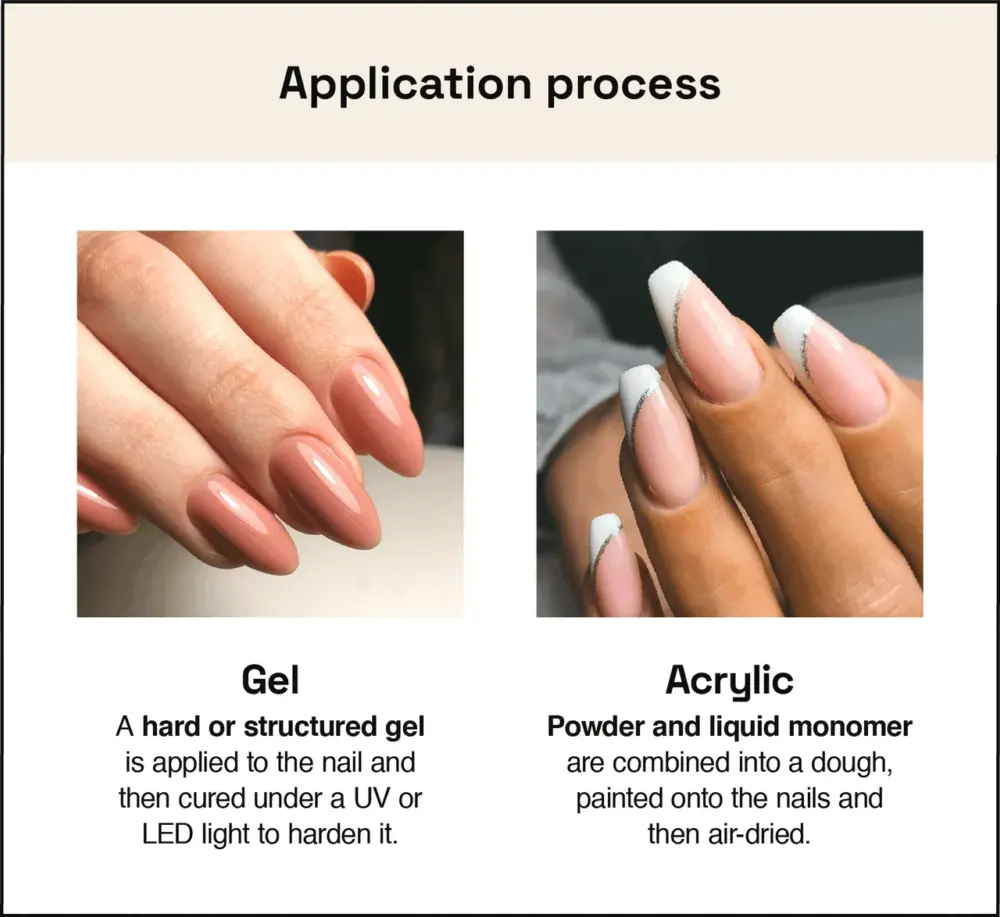
Gel nails and acrylic nails are distinct nail enhancement methods, primarily differing in their chemical composition, application process, and removal techniques. Gel nails cure under UV/LED light, while acrylics harden through air exposure.
Gel nails offer a flexible, glossy finish and are often favored for their natural look, but they may be less durable than acrylics and require UV/LED light for curing. Acrylic nails are known for their exceptional strength and longevity, though they can appear thicker and may emit stronger fumes during application.
Both gel and acrylic nails have potential health implications, including allergic reactions to chemicals and nail plate damage during improper application or removal. Durability varies, with acrylics generally being more robust than gels, while gels are often easier to apply at home.
To help you choose the best option for your needs, Barber Tall further explores the key differences, advantages, and disadvantages of gel and acrylic nails in the following sections.
What are the key differences between gel and acrylic nails?
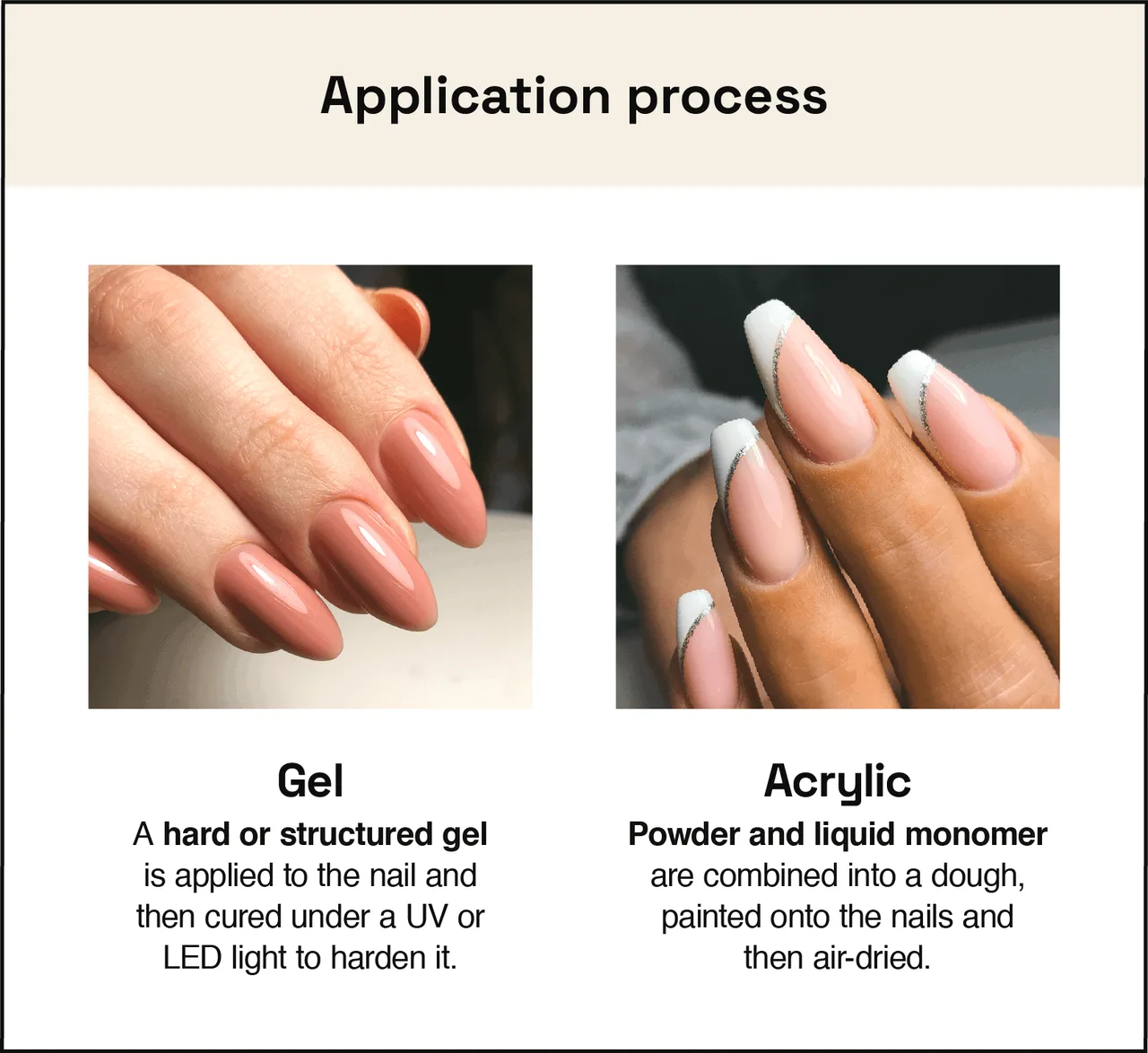
Gel nails and acrylic nails primarily differ in their chemical composition and application methods. Gel nails use a pre-mixed polymer gel that hardens under UV or LED light, creating a flexible and glossy finish. In contrast, acrylic nails involve mixing a liquid monomer with a powdered polymer at the time of application, forming a pliable bead that air-dries to a rigid, durable layer. This fundamental distinction influences their respective wear, appearance, and removal processes. While gel nails offer a more natural look and are often considered easier for at-home application, acrylics are known for their exceptional strength and longevity, despite potentially thicker results and stronger fumes during the process.
What are the advantages and disadvantages of gel nails?
Gel nails offer a natural appearance, flexibility, and a high-gloss finish, while their main drawbacks include lower durability compared to acrylics and the necessity of UV/LED light for curing. Gel nails present a popular option for nail enhancement, balancing aesthetic appeal with specific application and wear considerations. They are frequently chosen for their ability to mimic the natural nail’s look and feel, providing a lighter alternative.
However, prospective users should be aware of their susceptibility to chipping or breaking more readily than acrylics. Furthermore, the curing process requires specialized equipment, which can be a barrier for at-home application without the proper tools. Their removal, while generally gentler, often involves soaking and causes damage if not performed correctly.
What are the advantages and disadvantages of acrylic nails?
Acrylic nails offer exceptional strength and longevity, while their main disadvantages include a potentially thicker appearance, strong fumes during application, and a more complex removal process. Acrylic nails are a favored choice for their robust nature, providing a durable enhancement that withstands daily wear more effectively than some alternatives. However, users should consider the aesthetic outcome, as acrylics can look less natural than gel nails due to their thickness. The application process also involves strong chemical odors, which may be a concern for some individuals. Furthermore, the removal of acrylics typically requires a more intensive soaking process, which can lead to nail plate damage if not performed by a professional.
Do gel or acrylic nails pose more significant health risks?
Both gel and acrylic nails pose health risks, primarily involving allergic reactions to chemical ingredients and potential damage to the natural nail plate. These risks stem from the chemical processes involved in their application and removal, highlighting the importance of proper techniques and material quality. Users face exposure to various substances during application, which necessitates careful consideration of individual sensitivities and professional standards.
Which type of nail enhancement offers greater durability and ease of application?
Acrylic nails generally offer greater durability, while gel nails are often considered easier to apply, particularly for at-home use. This distinction highlights a key trade-off between the two popular nail enhancements. The choice between them frequently depends on individual priorities regarding longevity versus application simplicity.
What are ‘dip powder’ nails and how do they compare to gel and acrylic?
Dip powder nails involve applying a pigmented powder that hardens with an activator, offering a durable and lightweight alternative to gel and acrylics. This nail enhancement method stands out due to its unique application process, which bypasses the need for UV/LED light curing or liquid monomer mixing. Dip powder nails typically provide a strong, long-lasting finish that can last for several weeks. While they share durability with acrylics, dip powders are generally thinner and lighter, resembling the flexibility of gel nails without the curing light. Removal often involves soaking in acetone, similar to acrylics, but typically with less damage than improperly removed acrylics.
Conclusion
Ultimately, choosing between gel and acrylic nails depends on individual priorities: acrylics offer superior durability and longevity, while gel nails provide a more natural look and easier at-home application. Both methods carry health risks, primarily allergic reactions and potential nail damage from improper procedures. While acrylics are generally stronger, gels are often preferred for their flexibility and glossy finish, curing under UV/LED light rather than air-drying. For those seeking alternatives, dip powder nails present a durable, lightweight option that hardens with an activator, bypassing UV/LED lights or liquid monomers.