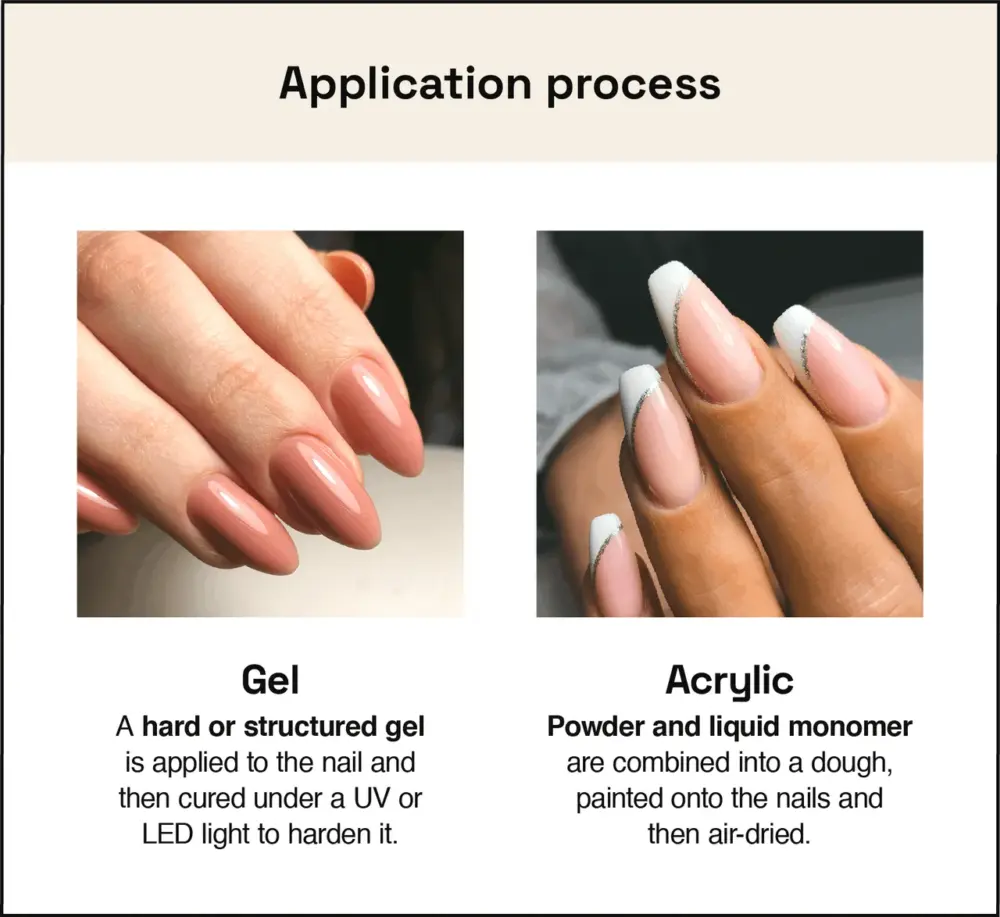
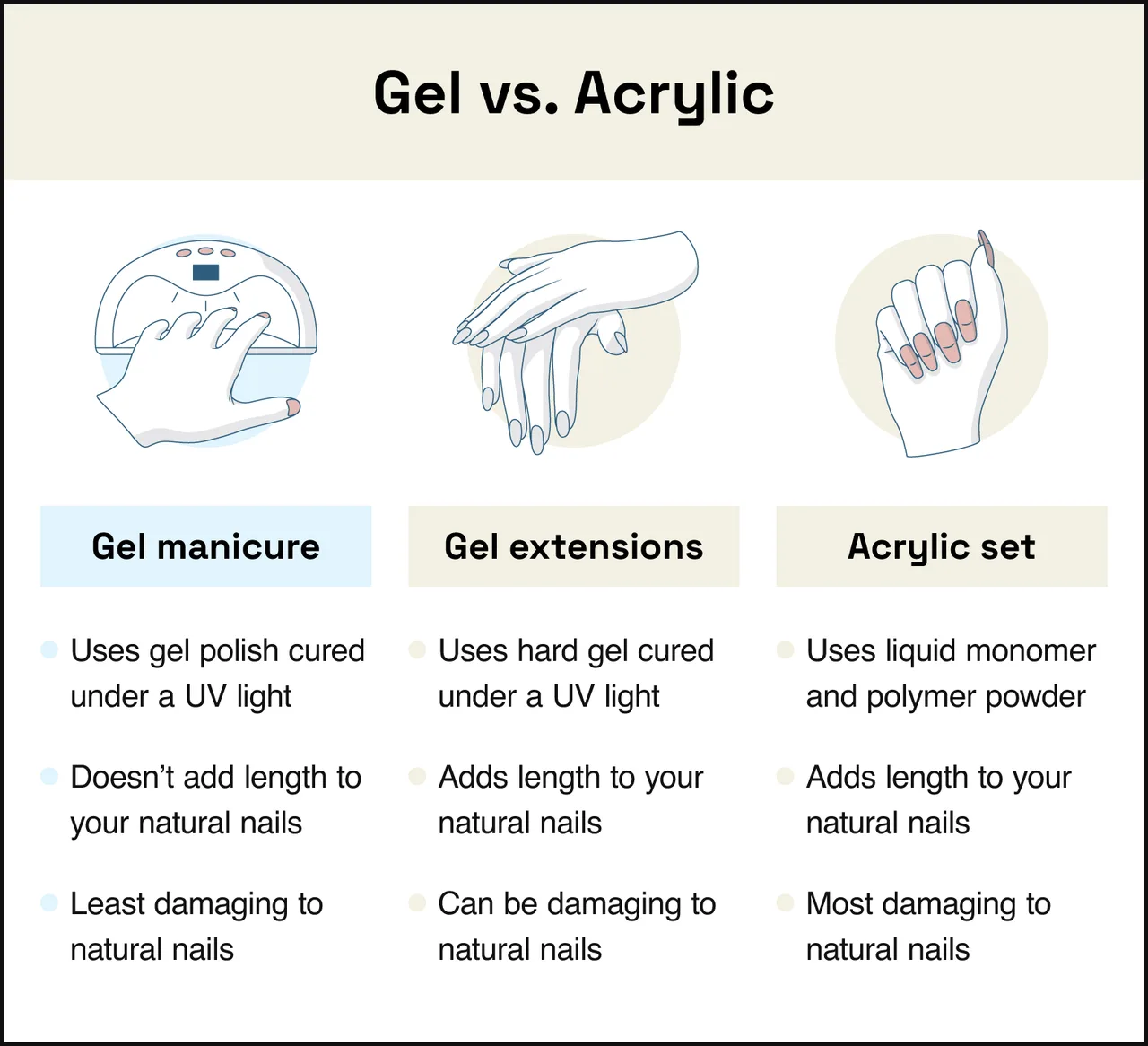
Acrylic nails and gel nails differ primarily in their chemical composition and application process. Acrylics are created by mixing a liquid monomer and a powdered polymer, forming a hard protective layer, while gel nails involve a pre-mixed polymer gel cured under UV or LED light.
Gel nails generally pose fewer health concerns than acrylics. Acrylic application involves stronger fumes and chemicals like methyl methacrylate (MMA), which can be harsh on natural nails and surrounding skin, whereas gels are typically odorless and more flexible.
Acrylic nails are more durable than gel nails. Acrylics are known for their exceptional strength and resistance to breakage, often lasting longer than gels, which are more prone to chipping or lifting if not maintained properly.
This article will explore these distinctions in detail, helping you understand the main differences between acrylic and gel nails.
What are the main differences between Acrylic and Gel Nails?
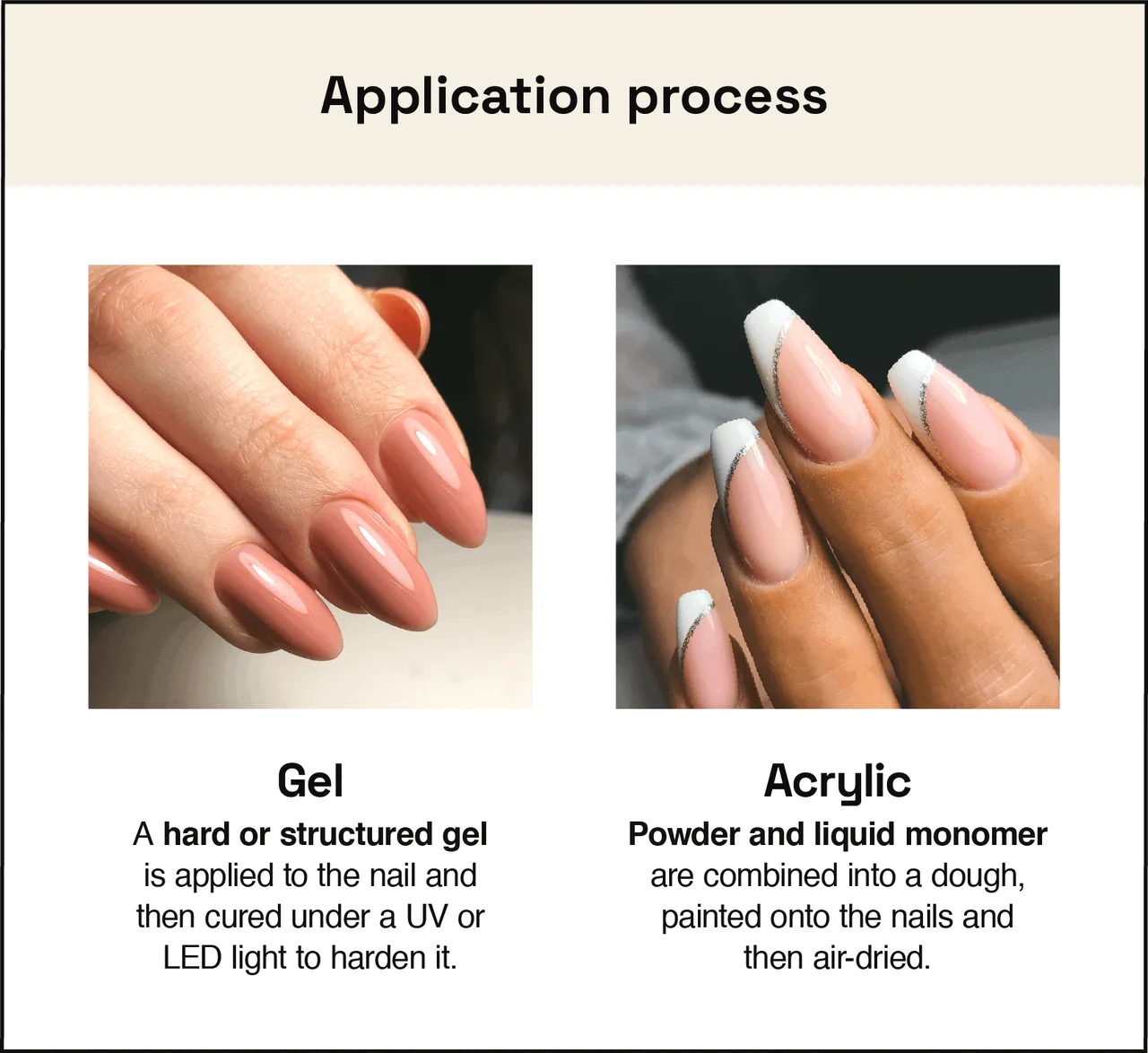
Acrylic and gel nails primarily differ in their chemical composition, application method, and overall durability and flexibility. Acrylics combine a liquid monomer and powder polymer, curing through air exposure to form a rigid layer. Gel nails utilize a pre-mixed polymer gel that requires curing under UV or LED light, resulting in a more flexible finish.
Which nail type, Acrylic or Gel, poses more health concerns?
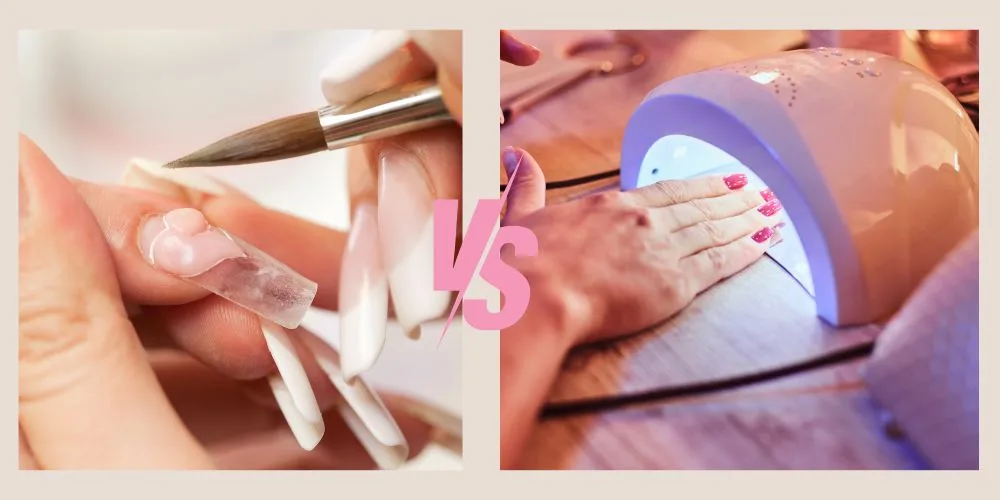
Acrylic nails generally pose more immediate health concerns than gel nails due to stronger chemical exposure and potential for allergic reactions. This distinction arises from the different chemical compositions and application processes.According to NIH (2011), methyl methacrylate (MMA) is a respiratory irritant and dermal sensitizer that has been associated with occupational asthma in a small number of case reports. Gel nails, conversely, typically use odorless formulations, reducing the risk of fume-related discomfort. Both types carry risks of nail damage or fungal infections if not applied or removed correctly. Acrylics also present a higher likelihood of allergic reactions due to the monomer liquid, such as ethyl acrylate, which is an acrylic monomer.
Are Acrylic Nails more durable than Gel Nails?
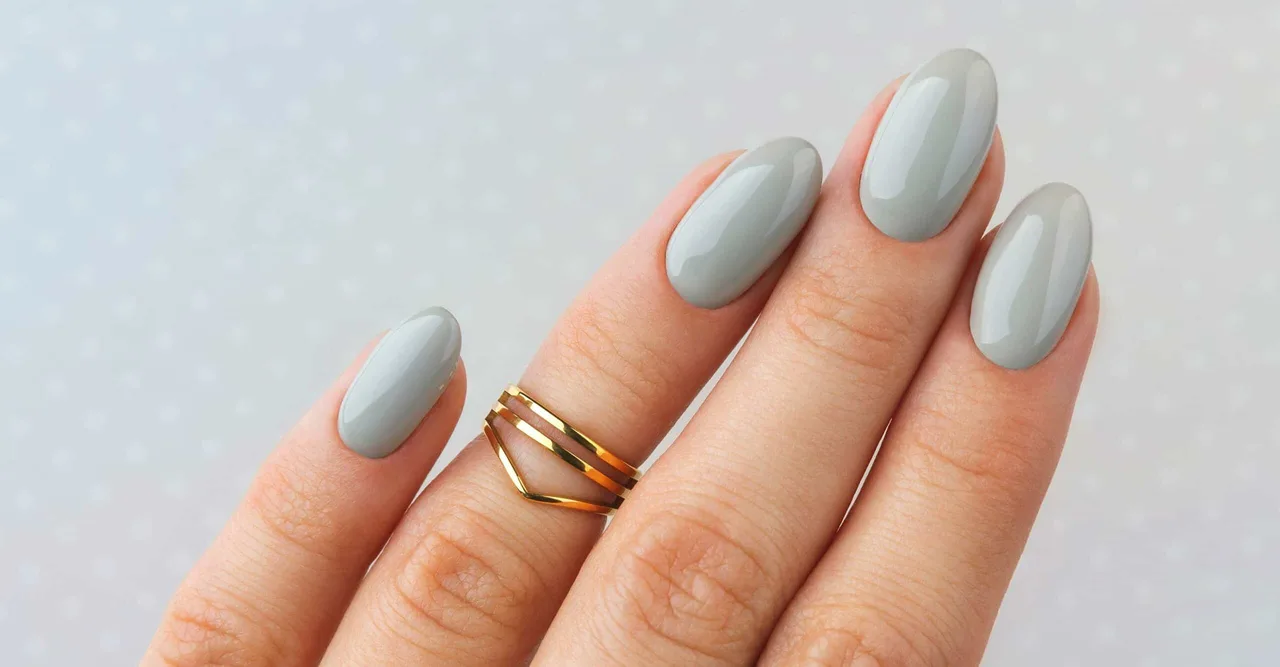
Acrylic nails are generally more durable than gel nails, offering superior resistance to chipping and breaking. This difference arises from their distinct chemical compositions and curing processes. Acrylics form a harder, more rigid layer that withstands impact and daily wear better than the more flexible gel nails. They typically last longer than gel nails, with proper maintenance extending their wear for several weeks. Gel nails, while flexible, are more prone to chipping or lifting if not properly cared for. The strength of acrylics makes them a preferred choice for individuals seeking a long-lasting and robust nail enhancement.
Which nail application, Acrylic or Gel, is more cost-effective?
Acrylic nails are generally more cost-effective than gel nails in terms of initial application and long-term maintenance. This distinction stems from the differences in material costs and the labor required for application and removal processes. While initial application costs for both can be similar, acrylics often have lower refill prices and a longer lifespan between appointments. Gel nails, though sometimes cheaper initially, may require more frequent maintenance or specialized removal, increasing overall expenses. For example, acrylic nails typically fall within a certain price range, while gel manicures often have a different but sometimes overlapping cost. Removal costs also factor into the overall cost-effectiveness; acrylics can often be soaked off, while some gel types require filing, which can be more time-consuming and potentially damaging without professional help.
How do Acrylic and Gel Nails react to different types of nail art and embellishments?
Acrylic nails and gel nails exhibit distinct compatibilities with various nail art techniques and embellishments. This difference arises from their inherent chemical structures and curing processes. Acrylics offer a robust base for intricate 3D designs, embedding objects, and sculptural art due to their strength and ability to be molded before curing. Gel nails, with their smoother, more flexible finish, are ideal for detailed hand-painting, encapsulated glitter, and chrome effects, as they provide a glossy surface that enhances fine details.
Conclusion
In summary, the choice between acrylic and gel nails hinges on individual priorities regarding durability, health concerns, and cost-effectiveness. Acrylics offer superior strength and a longer lifespan, making them more durable and often more cost-effective over time. However, gel nails generally pose fewer immediate health concerns due to their odorless application and reduced chemical exposure. Both types support various nail art, but their distinct compositions influence compatibility. Understanding these core differences allows for an informed decision based on desired outcomes and personal preferences.