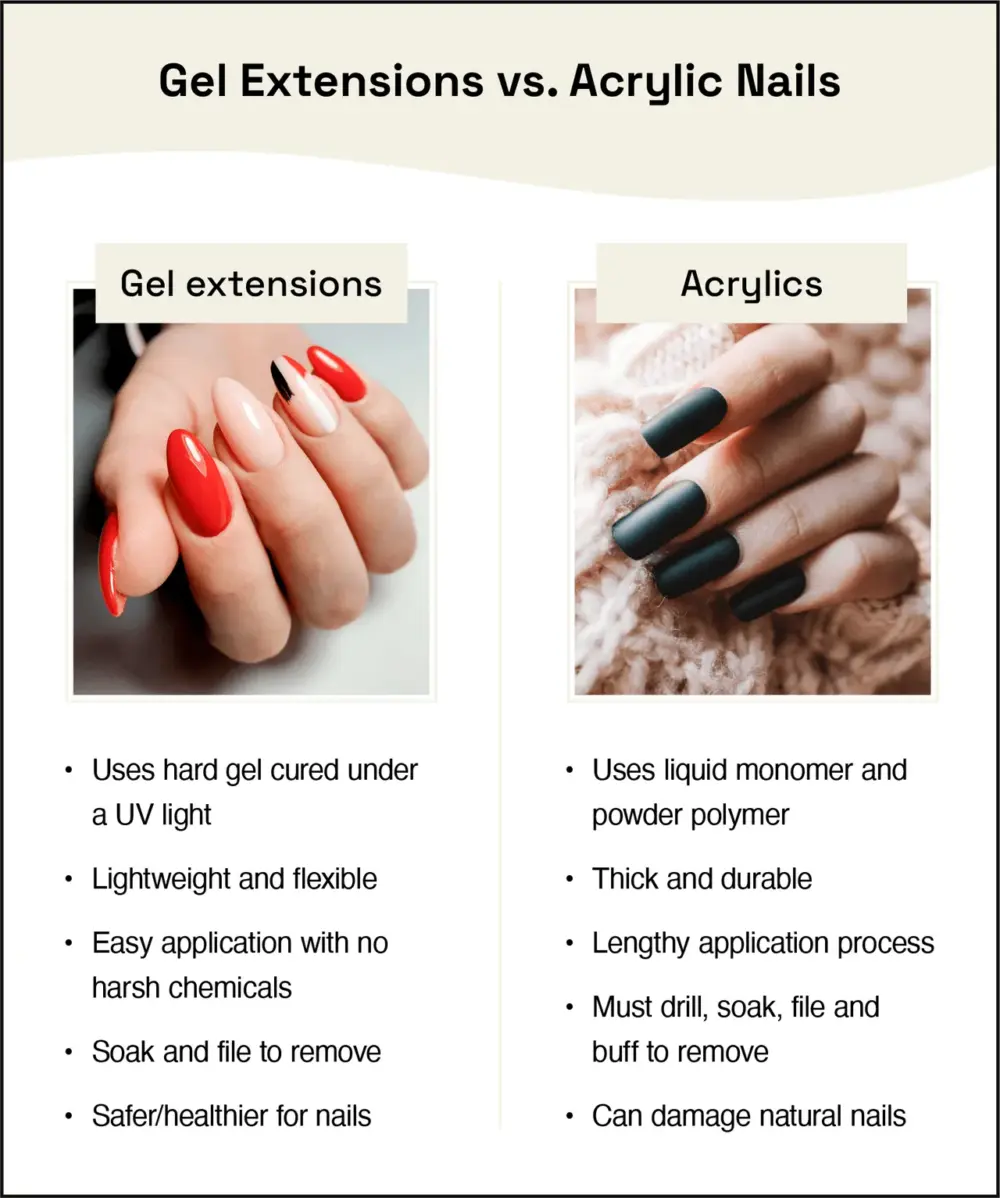
Gel nails offer flexibility and a natural look, while acrylic nails provide exceptional strength and durability. Evaluating their pros and cons is crucial for selecting the best option for your lifestyle and aesthetic preferences.
Choosing between gel and acrylic nails depends heavily on individual needs, such as desired nail length, strength requirements, and specific design preferences. Each type caters to different priorities, from enhancing natural nails to creating dramatic extensions.
Gel nails typically cost more per application than acrylic nails. However, the total cost can vary based on maintenance and removal processes.
Understanding these foundational differences in general pros and cons, how they compare for various needs, and their durability is key to making an informed decision about your next manicure with Barber Tall.
What are the general pros and cons of gel versus acrylic nails?
Gel nails offer a flexible, natural appearance with a curing process, while acrylic nails provide superior strength and durability through chemical bonding. Evaluating the overarching advantages and disadvantages of gel versus acrylic nails considers their application, removal, and aesthetic outcomes. Gel nails generally involve less damage to the natural nail during removal and boast a shinier finish without requiring additional top coats. Acrylic nails are more resilient to breakage and typically easier to repair, making them a suitable choice for those seeking robust nail enhancements.
How do gel and acrylic nails compare for different nail needs?
Gel nails offer suitability for brittle or shorter nails and those desiring a natural look, while acrylic nails provide superior strength for extensions and intricate designs. Evaluating which nail type best suits various needs considers durability, aesthetic preferences, and specific nail conditions. Each option provides distinct advantages depending on whether the user prioritizes flexibility or robust enhancement.
Is gel or acrylic more suitable for nail biters?
Gel nails offer a more suitable option for nail biters due to their flexibility and ability to mimic natural nails, providing a protective layer without being overly rigid. This contrasts with acrylics, which are harder and more prone to cracking under repetitive stress from biting. Gel’s semi-permanent nature and natural feel can help in breaking the biting habit by making nails less appealing to bite and providing a barrier for natural nail growth. Additionally, the smoother finish of gel nails often deters biting more effectively than the rougher texture of acrylics. Gel applications also typically result in less damage to the natural nail during removal, a crucial factor for already compromised nails.
Which option, gel or acrylic, is better for weak or damaged nails?
Gel nails are generally better for weak or damaged nails because they provide a protective, flexible layer that aids in recovery and growth without excessive rigidity. This suitability arises from gel’s ability to offer support while minimizing stress on the compromised natural nail. Gel applications create a semi-permanent barrier that shields weak nails from external damage, promoting healthier growth. Furthermore, the removal process for gel nails is typically less abrasive than acrylic removal, further preserving the integrity of fragile nails.
What is the durability of gel versus acrylic nails?
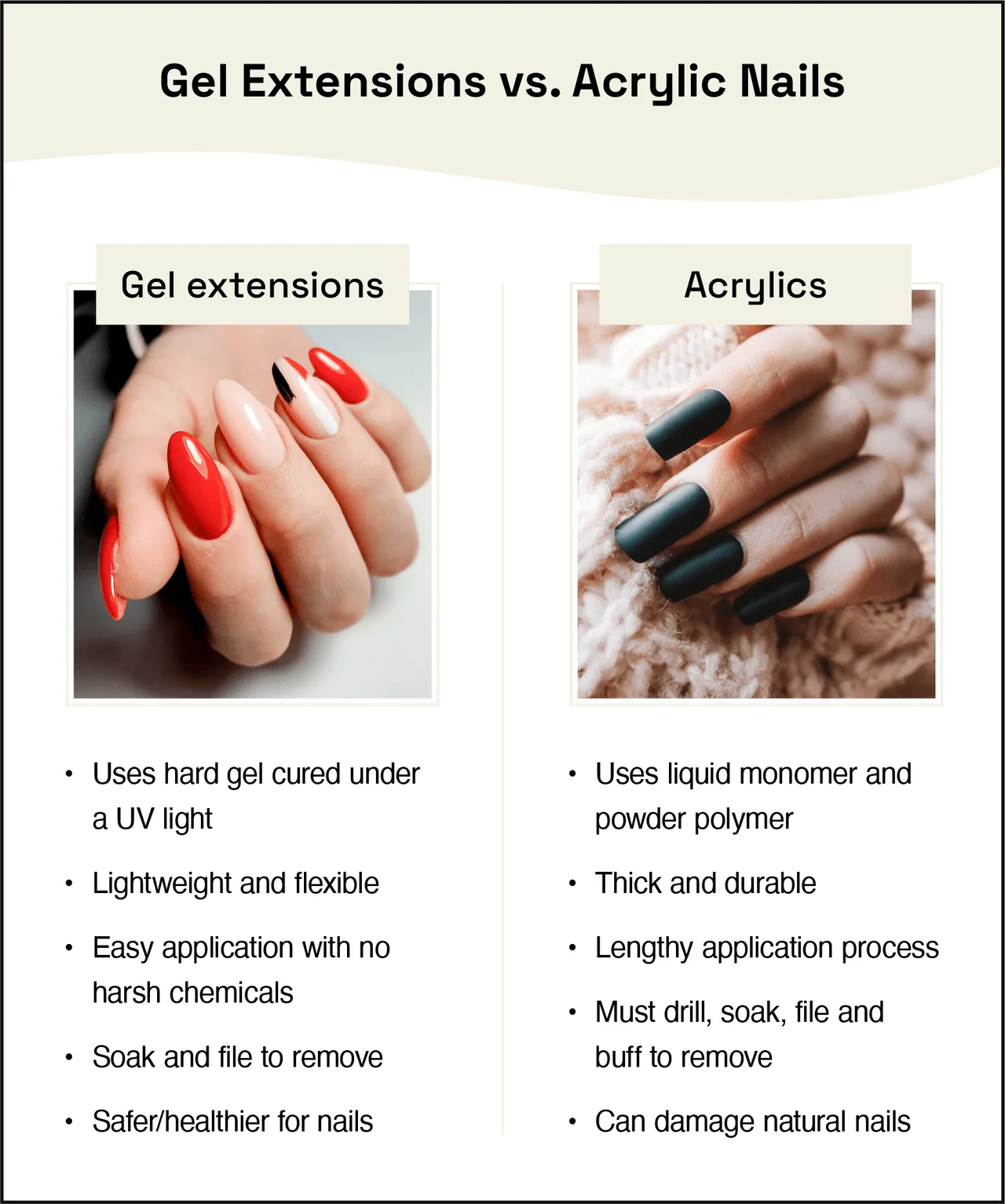
Gel nails offer moderate durability lasting approximately two to three weeks, while acrylic nails provide superior longevity, often extending four to six weeks. Evaluating the durability of gel versus acrylic nails involves comparing their resistance to chipping, breaking, and lifting under typical wear. Gel nails maintain a glossy finish but are more prone to chipping with heavy impact. Acrylic nails are highly resilient and better withstand daily wear and tear, making them a more robust option for those requiring maximum durability. The strong chemical bond of acrylics contributes to their extended lifespan and greater resistance to damage.
How does the cost of gel nails compare to acrylic nails?
Gel nails typically have higher initial application costs, while acrylic nails often incur higher overall refill expenses. A detailed cost comparison between gel and acrylic nails encompasses initial application fees, ongoing refill costs, and potential removal charges. The average cost for a full set of gel nails ranges from $35 to $100, while acrylic nails typically cost between $30 and $60. Gel nail refills are often priced similarly to the initial application, given the specialized curing process. Acrylic refills are generally less expensive per visit but are needed more frequently due to their faster growth visibility and increased susceptibility to lifting, which can accumulate to a higher total over time. Removal costs also differ, with gel removal often being a gentler process that preserves nail health, potentially reducing post-removal treatment expenses compared to acrylics.
How do gel and acrylic nails impact long-term nail health?
Gel and acrylic nails exhibit distinct long-term impacts on natural nail health, primarily concerning potential weakening and damage during application and removal. Evaluating these effects involves considering the chemical processes, removal methods, and the overall stress placed on the nail plate. Both options present considerations for maintaining nail integrity over extended periods of use.
What are the considerations for allergic reactions to gel versus acrylic products?
Gel nails pose a higher likelihood of allergic reactions due to methacrylate compounds, while acrylics involve a lower risk primarily from ethyl methacrylate. Evaluating the considerations for allergic reactions to gel versus acrylic products involves understanding the common allergens and their manifestations. Gel products often contain HEMA and di-HEMA trimethylhexyl dicarbamate, potent allergens responsible for contact dermatitis. Conversely, acrylic nails primarily utilize ethyl methacrylate (EMA), which generally causes fewer allergic responses. Identifying reactions involves recognizing symptoms such as itching, redness, swelling, and blistering around the nail area, with mitigation strategies including patch testing and choosing hypoallergenic alternatives.
Conclusion
Ultimately, the choice between gel and acrylic nails hinges on prioritizing natural aesthetics and flexibility versus superior strength and durability. Gel nails are ideal for those seeking a natural look, addressing brittle or damaged nails, and maintaining long-term nail health with gentler removal. Conversely, acrylic nails offer robust extensions, intricate design potential, and extended wear, making them suitable for individuals prioritizing resilience. Understanding these distinct benefits, along with cost implications and potential allergic reactions, ensures an informed decision that aligns with personal style and lifestyle needs.