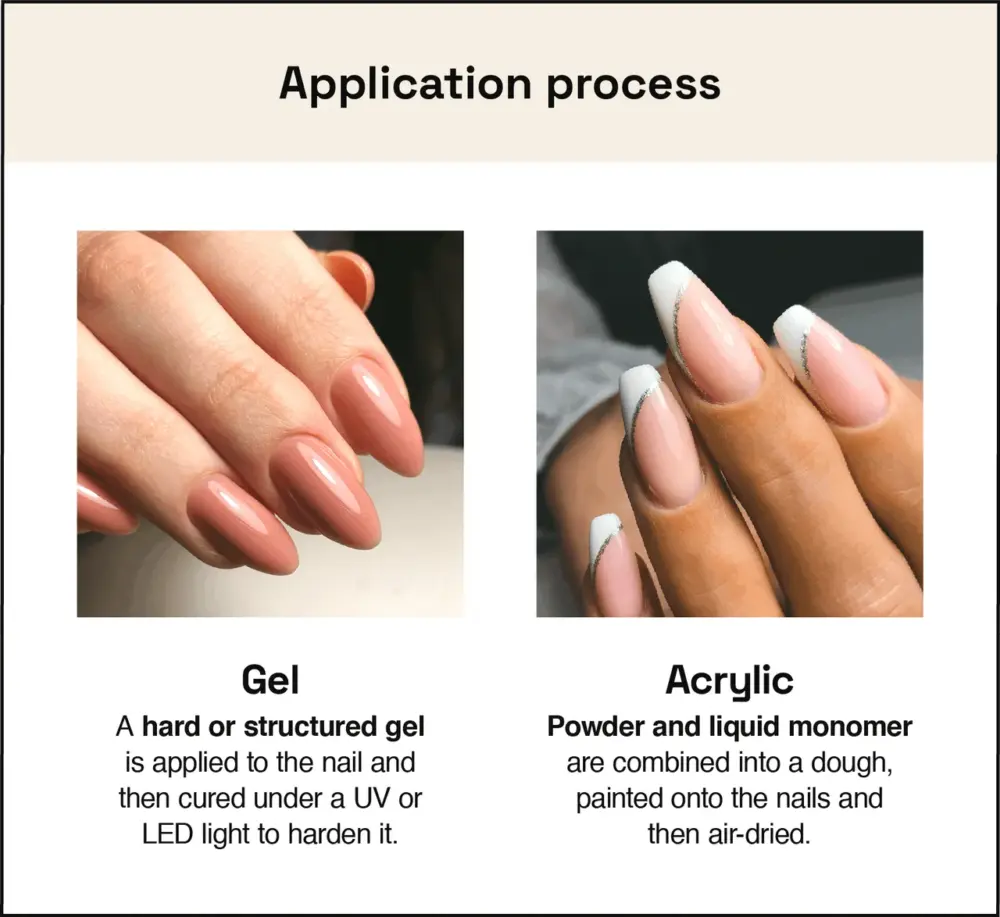
Gel and acrylic nails differ in application, feel, and durability.
Gel nails offer flexibility and a glossy finish. In contrast, acrylics are harder and more rigid.
This article explores the key differences between gel and acrylic nails to help you decide.
What are the key differences between gel and acrylic nails?
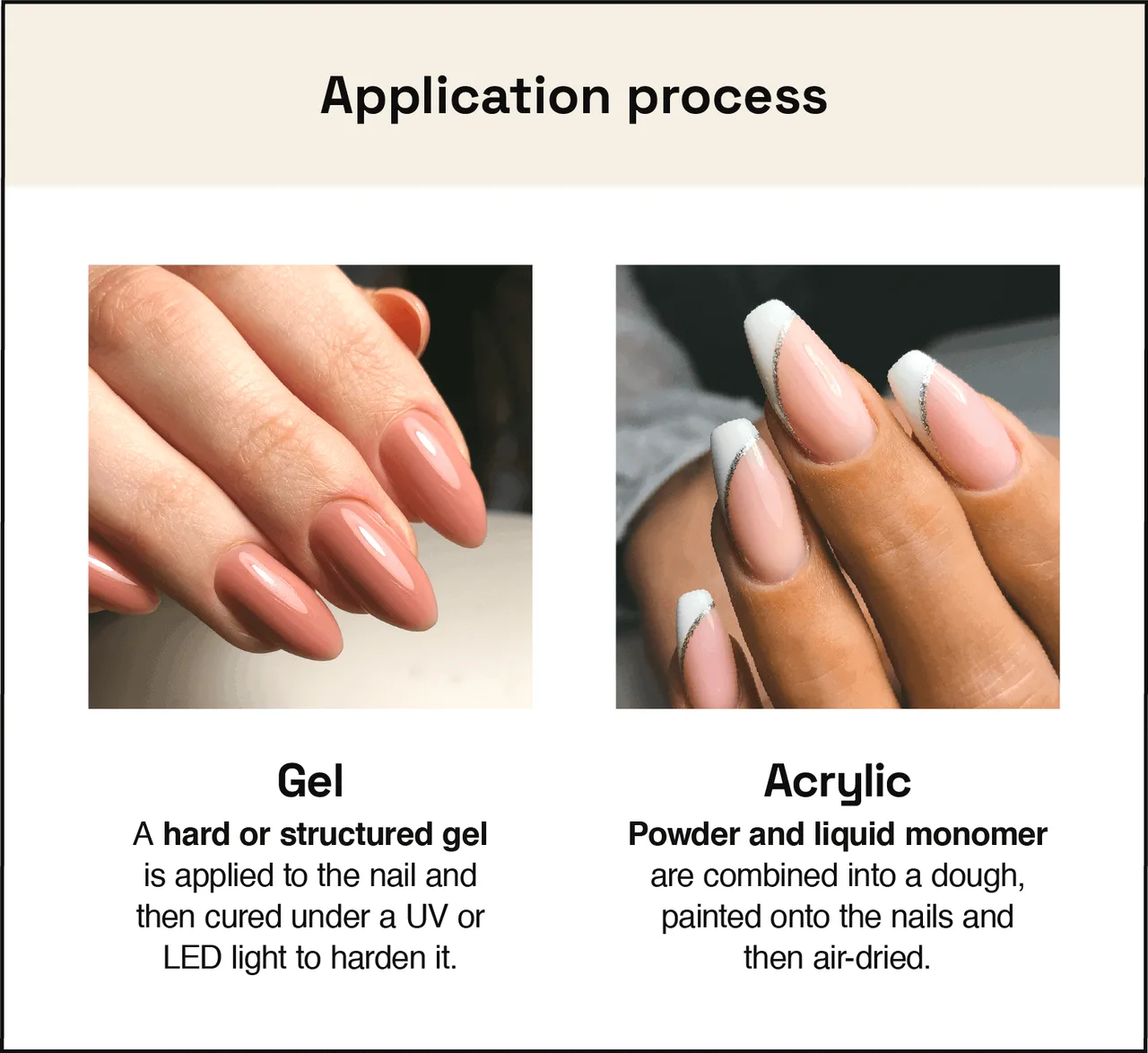
Gel and acrylic nails primarily differ in their application, aesthetic, and removal processes. Both options provide nail enhancements, but their distinct compositions dictate varied experiences and results. These differences are evident across various attributes, from how they are applied to their final appearance on the nail.
While gel nails involve curing a viscous gel under UV light for a flexible, glossy finish, acrylic nails combine a liquid monomer with a powder polymer to create a harder, more rigid layer.
Which nail enhancement option is better: gel or acrylic?
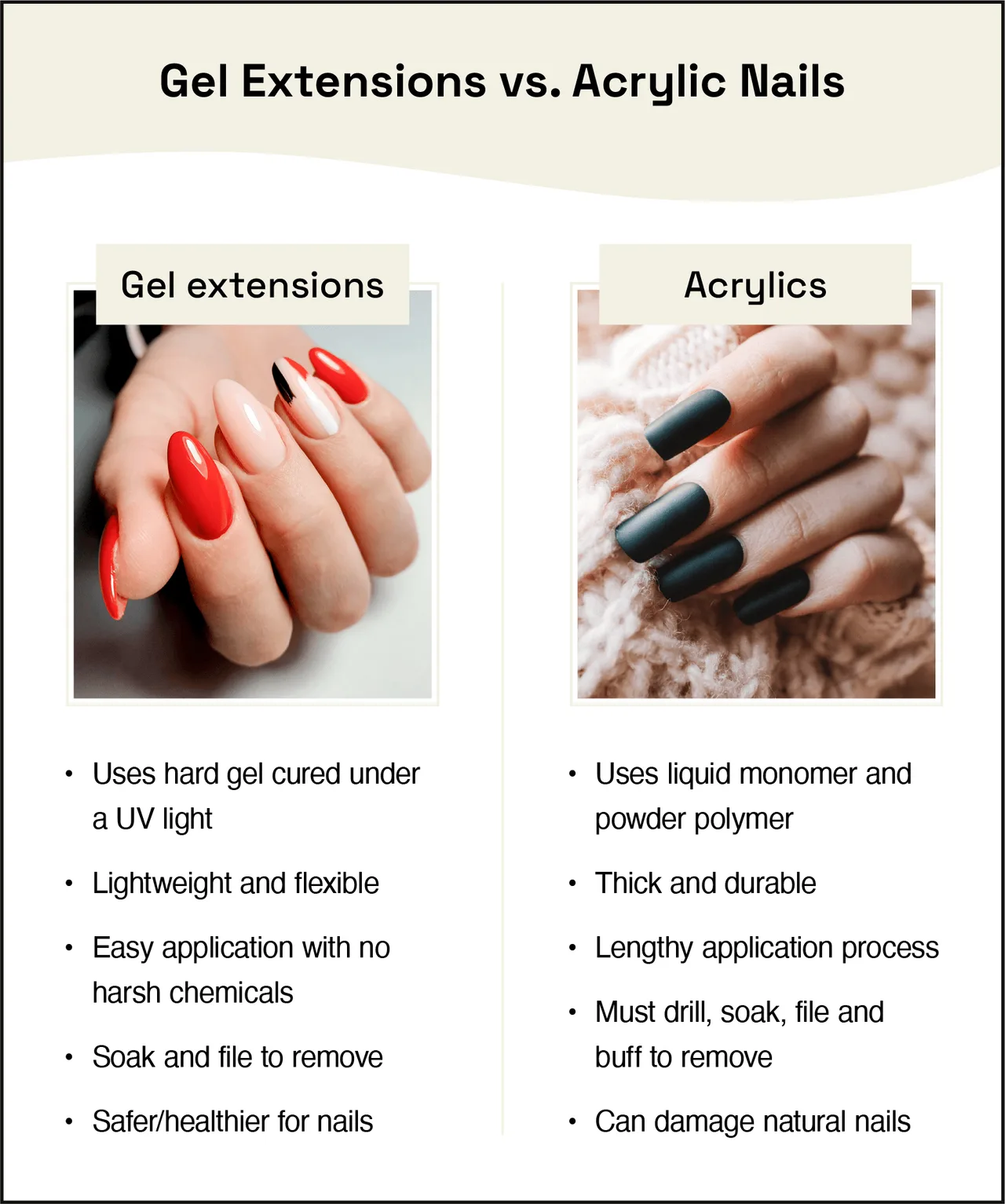
Neither gel nor acrylic nails are inherently better; the optimal choice depends on individual lifestyle, aesthetic preferences, and nail health. This means the best option varies for everyone.
How do gel and acrylic nails compare in terms of durability and longevity?
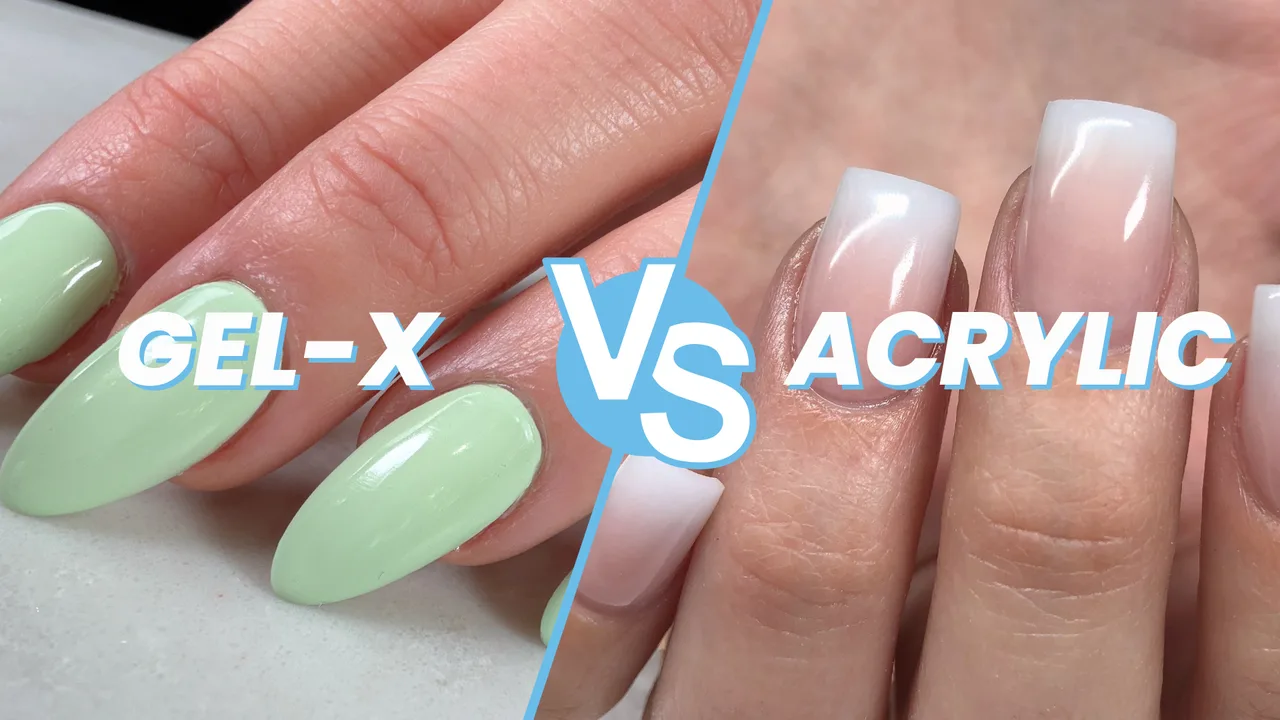
Acrylic nails generally offer superior durability and resistance to chipping and breaking compared to gel nails, though both typically last around 2-3 weeks. This difference stems from the inherent rigidity of acrylics versus the flexibility of gels.
Acrylics create a harder, more robust layer, making them more resistant to physical impacts and daily wear and tear. Gel nails, while flexible and less prone to shattering, may show wear more quickly with heavy use.
What is the impact of gel and acrylic nails on natural nail health?
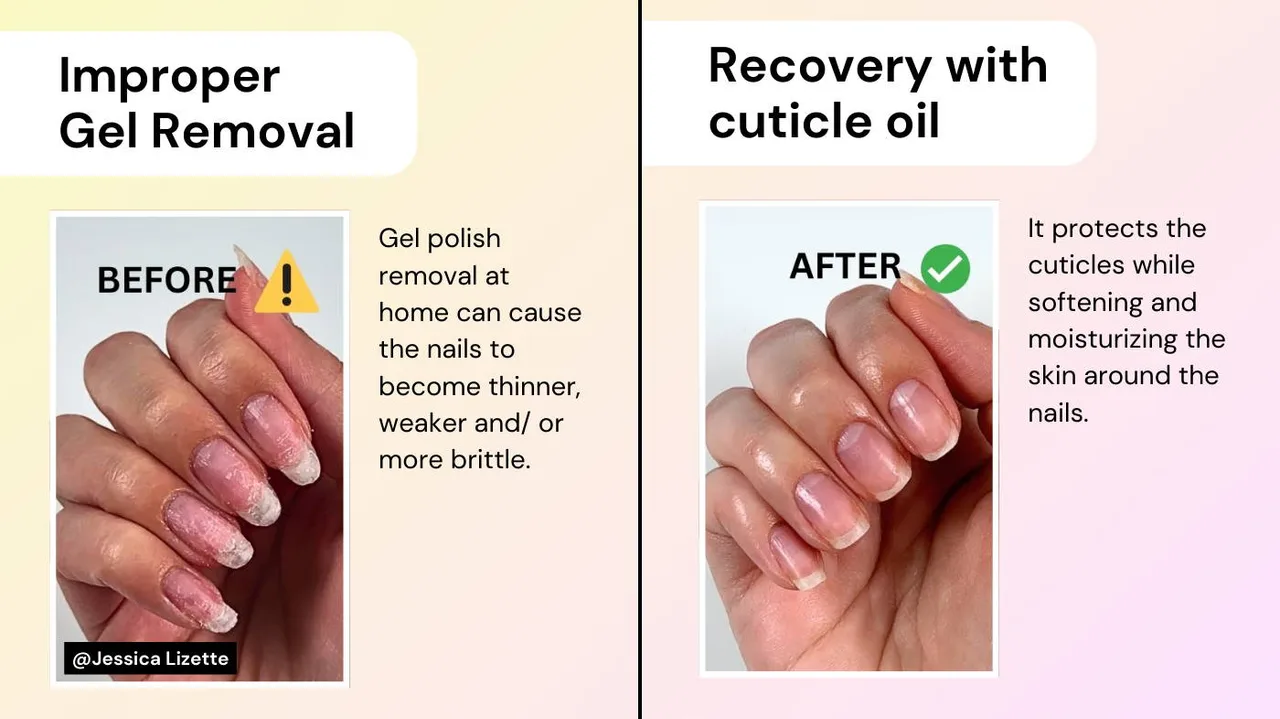
Both gel and acrylic nails impact natural nail health; however, improper application or removal of either leads to damage such as thinning, brittleness, or infections. This impact is a significant consideration when choosing between these two enhancement options.
Gel nails are often considered gentler due to their flexibility, potentially reducing stress on the natural nail. Acrylic nails, being more rigid, exert greater pressure. Proper preparation of the natural nail and careful removal techniques are crucial in minimizing potential damage associated with both gel and acrylic applications.
How do gel and acrylic nails differ in their sensory experience during wear?
Gel nails offer a more flexible, lighter feel on the natural nail, while acrylic nails provide a harder, more rigid sensation. This distinction in sensory experience arises from their inherent material properties.
Gel nails are known for their pliable nature, mimicking the natural nail’s movement more closely and often feeling less weighty. Acrylic nails, conversely, create a thicker, more unyielding layer, which can feel more substantial and less flexible during wear.
Conclusion
Choosing between gel and acrylic nails depends on lifestyle, aesthetic desires, and nail health. Gel offers flexibility and a natural look, while acrylics provide superior hardness and durability. Both last 2-3 weeks, but proper application and removal are crucial for natural nail health. Understanding these differences ensures an informed decision tailored to your needs.