Exploring Nail Extension Styles & Materials delves into various styles and materials, offering enhanced length, strength, and durability for nails.
Several common types of nail extensions exist, each with distinct application methods and finishes. These include acrylic, gel, and dip powder extensions.
The materials used for nail extensions significantly impact their appearance, longevity, and removal process. Key materials are liquid monomer and polymer powder for acrylics, oligomers for gels, and cyanoacrylate with powder for dip systems.
What Are the Primary Styles of Nail Extensions?
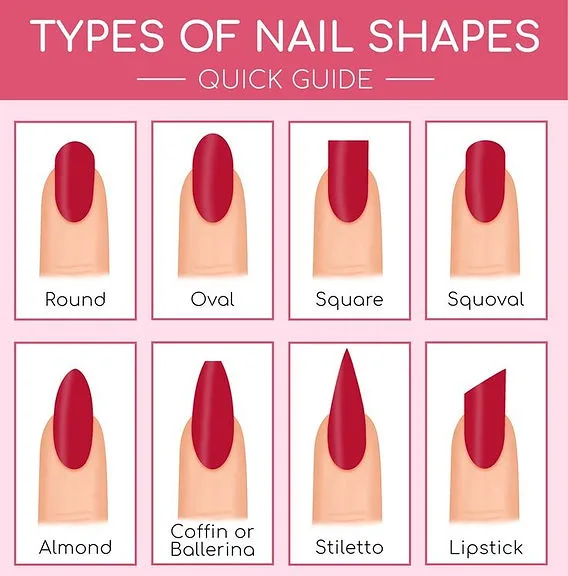
Nail extension styles encompass diverse shapes and artistic designs. These styles dictate the overall look and feel of extended nails. Exploring these different approaches reveals how various shapes and design elements contribute to diverse visual outcomes.
Common styles include:
- Square
- Oval
- Coffin
- Almond
- Stiletto
Alongside these shapes, intricate artistic designs add further variety:
- Ombré
- French tips
- Encapsulated glitter
What Materials Are Used for Nail Extensions?
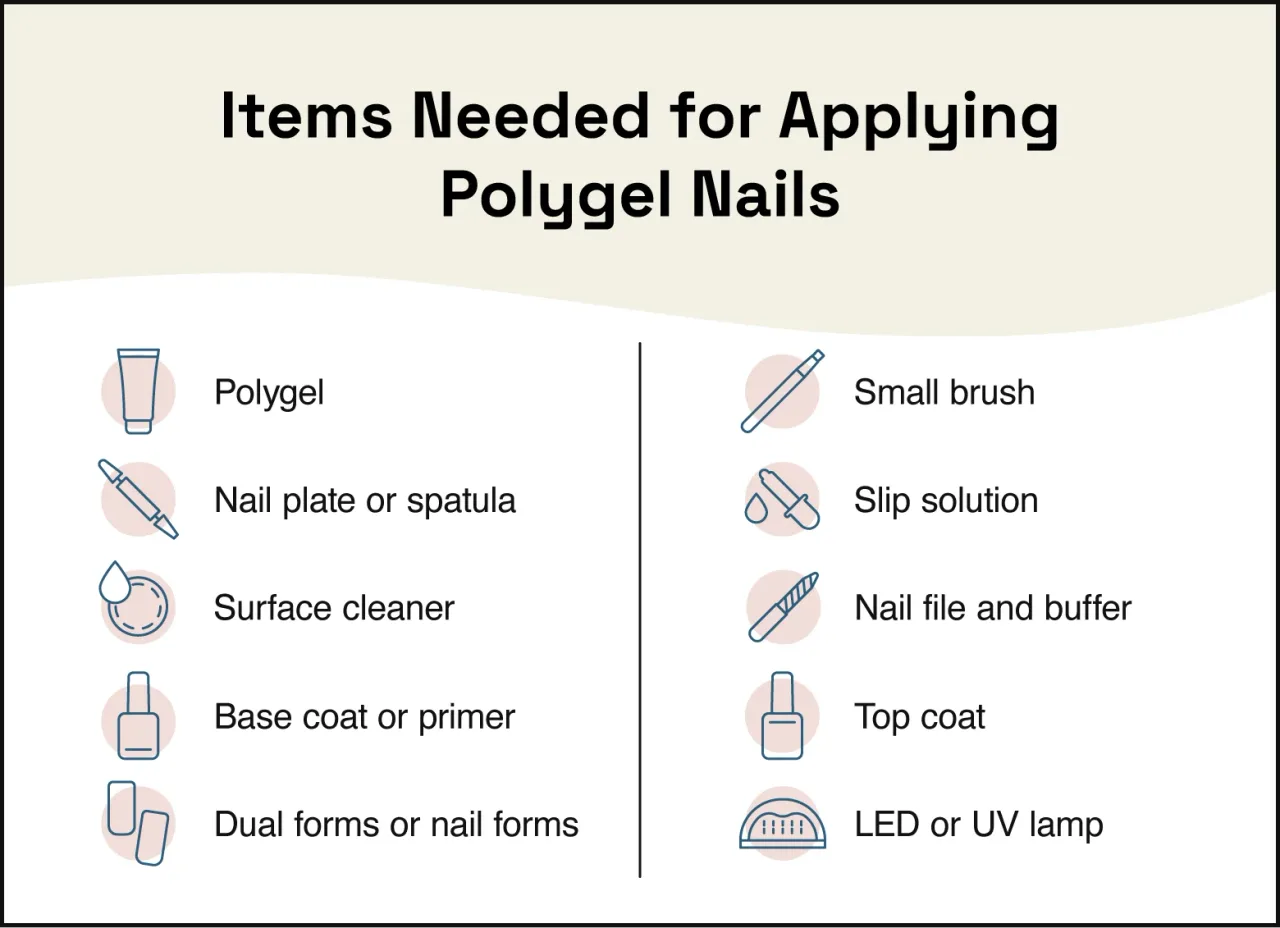
Acrylics, gels, and dip powders are the primary materials for nail extensions. Each offers distinct properties and application processes. Understanding their composition is crucial for desired results and proper nail health.
What Are the Key Differences Between Gel and Acrylic Nail Extension Materials?
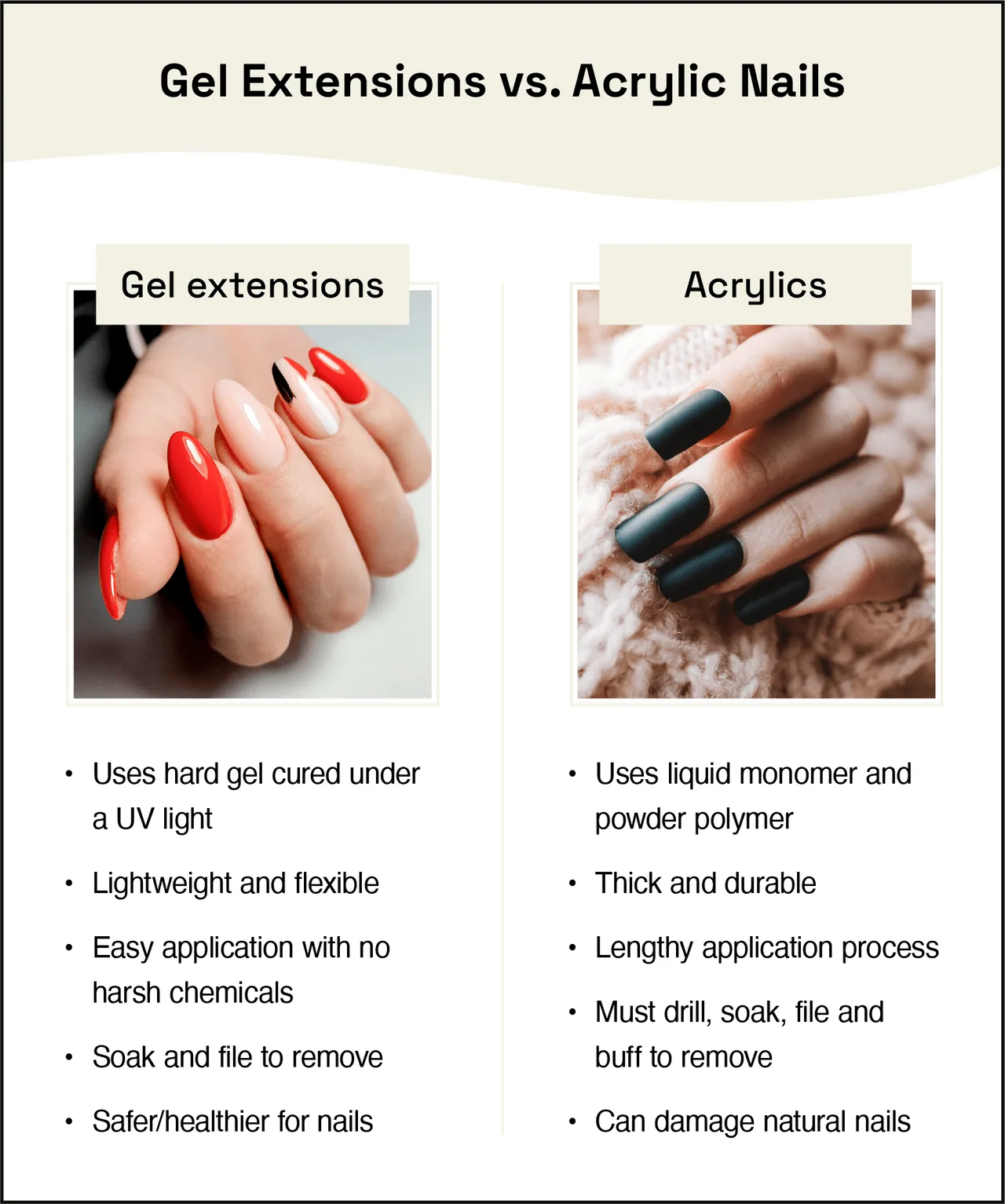
Gel and acrylic nail extensions differ significantly in their application, durability, flexibility, and removal processes. These distinctions are important for both technicians and clients to consider when choosing a nail enhancement method. Understanding the unique characteristics of each material helps in selecting the most suitable option for desired aesthetic and functional outcomes.
Gel nails are typically applied as a gel that is cured under UV or LED light, offering more flexibility and a glossy finish, while acrylics are created by mixing a liquid monomer with a powder polymer, resulting in a harder, more rigid enhancement. Acrylic nails are generally more durable and resistant to breakage than gel nails, with gel layers being thinner, softer, and more flexible, making them appear more natural but less durable, according to World Nail College. In terms of removal, gel nails are often soaked off, whereas acrylics typically require soaking in acetone, which can be a more intensive process for natural nails.
How Do Different Nail Extension Styles Influence Overall Aesthetics?
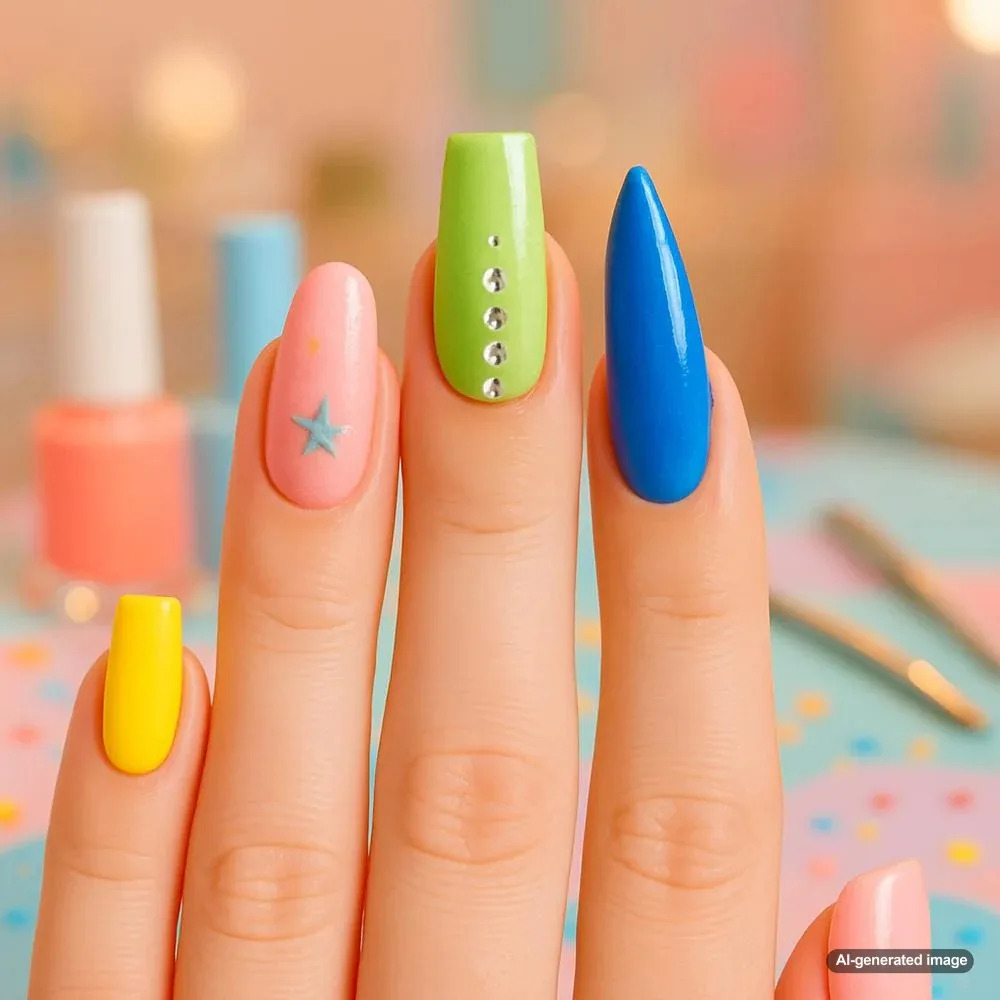
Nail extension styles dramatically alter hand aesthetics, influencing perceived length, width, and elegance. These styles shape how nails contribute to visual appeal. Various designs and shapes create distinct impressions, from bold statements to subtle enhancements.
What Are Lesser-Known or Emerging Materials in Nail Extensions?
Lesser-known or emerging materials in nail extensions include fiberglass and silk wraps. These offer unique properties for specific applications.
These materials provide alternative solutions for reinforcing and enhancing natural nails. Understanding their distinct characteristics helps in selecting appropriate options for desired nail health and aesthetic outcomes.
Are There Eco-Friendly or Hypoallergenic Options for Nail Extension Materials?
Yes, eco-friendly and hypoallergenic nail extension options exist, reducing chemical exposure and using sustainable ingredients. These alternatives address concerns about environmental impact and allergic reactions. The availability of such options provides safer choices for both clients and nail technicians. They prioritize ingredient transparency and often exclude common allergens and harsh chemicals found in traditional formulations.
Conclusion
Nail extensions offer a dynamic realm of aesthetic enhancement, primarily serving to add length, strength, and durability. With diverse styles, from classic shapes to intricate designs, and materials like acrylic, gel, and dip powder, they significantly influence overall aesthetics. Understanding the distinctions in application, durability, and removal across these materials, alongside exploring emerging eco-friendly and hypoallergenic options, empowers informed choices for personalized and healthy nail enhancements.