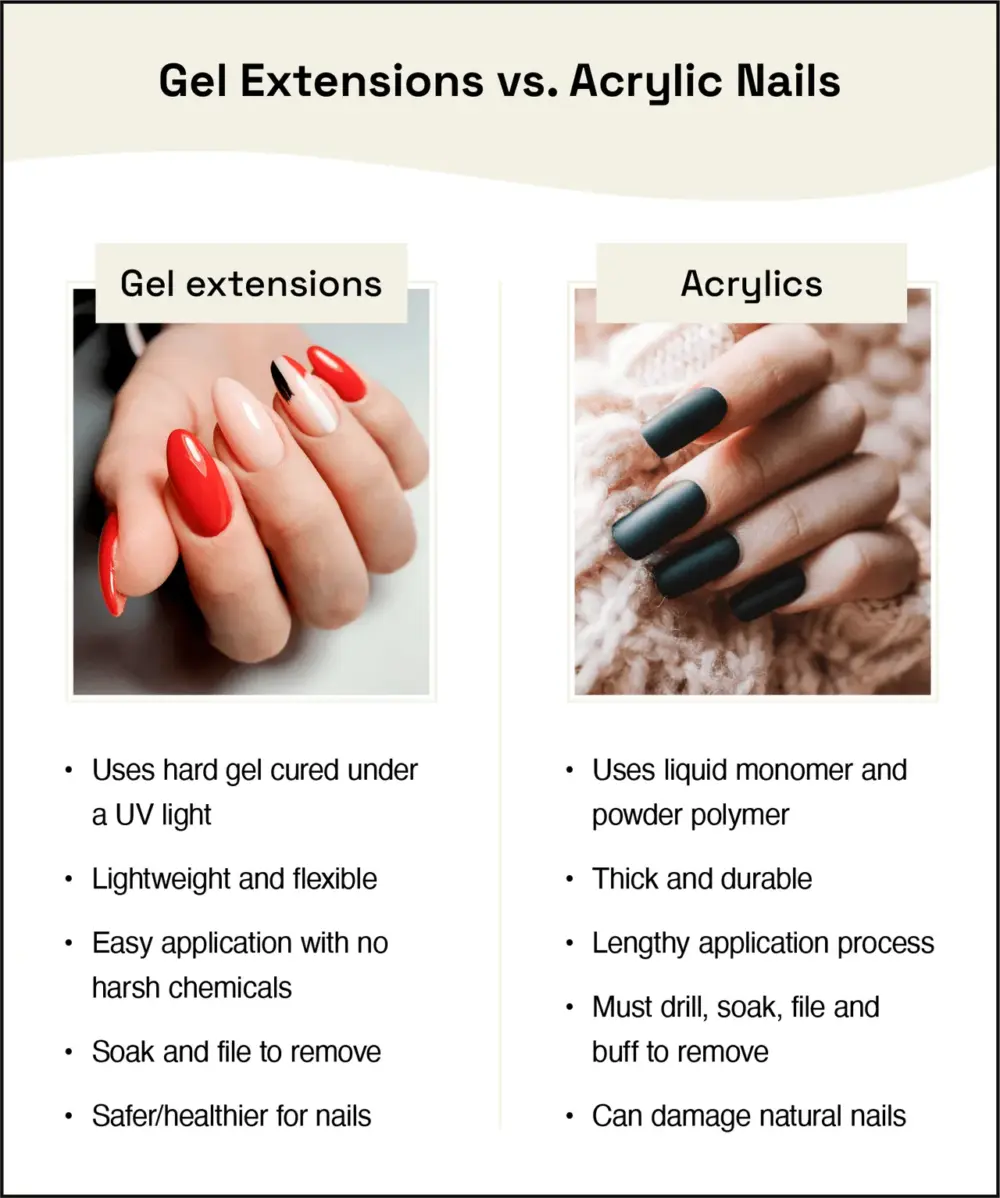
Acrylic nail enhancements provide a durable and customizable option for achieving desired nail length and strength.
Acrolycs differ from gel nail enhancements primarily in their chemical composition and application process, with acrylics using a liquid monomer and powder polymer to create a hard protective layer.
Common types of nail enhancements include acrylic, gel, and dip powder systems, each providing distinct benefits and aesthetics.
At Barber Tall, understanding these fundamental differences is key to exploring what acrylic nail enhancements entail, how they compare to gel, and the various types available.
What are Acrylic Nail Enhancements?
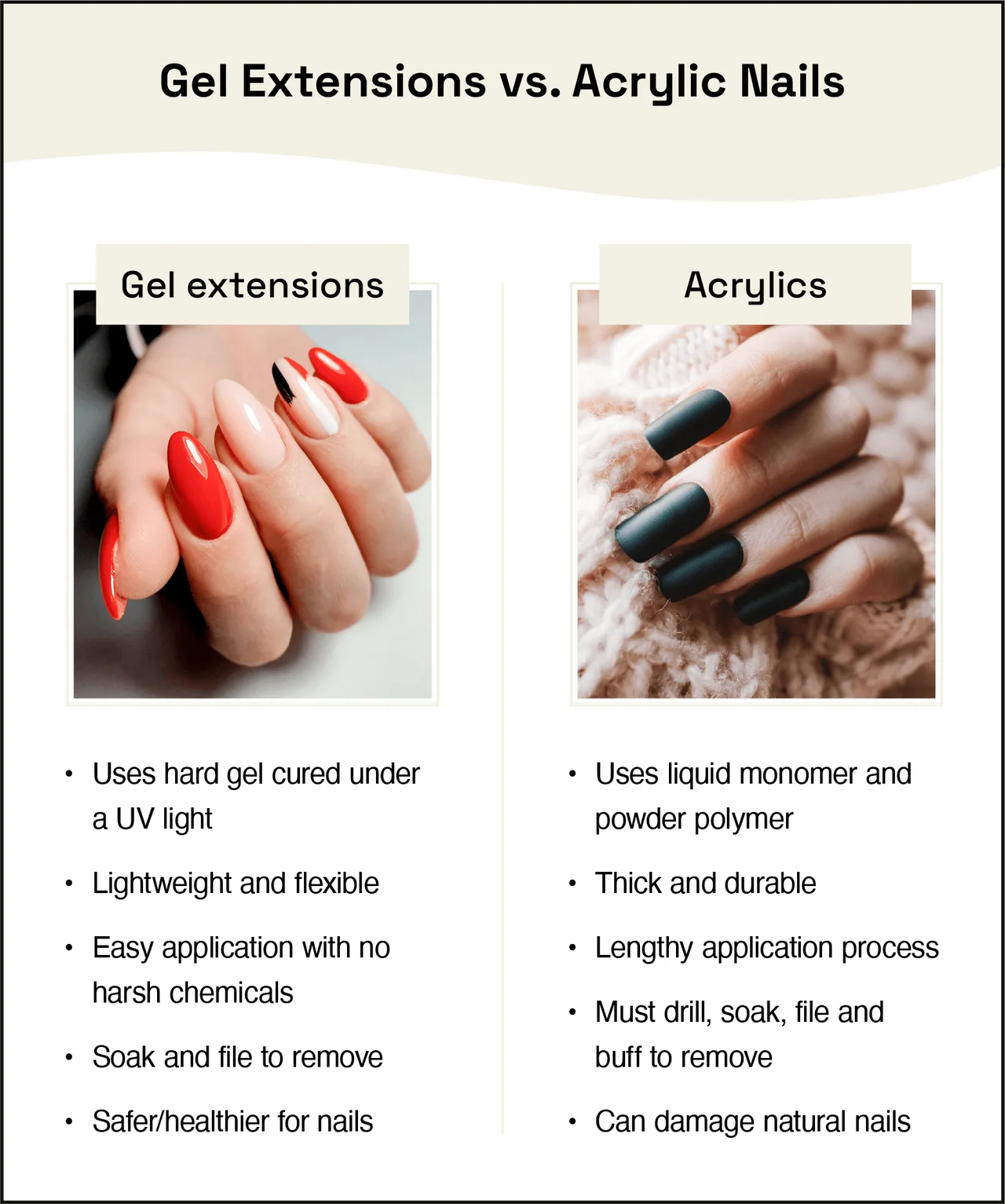
Acrylic nail enhancements combine a liquid monomer and a powdered polymer to form a durable protective layer over natural nails. This mixture hardens into a strong, long-lasting coating, extending nail length and enhancing their strength.
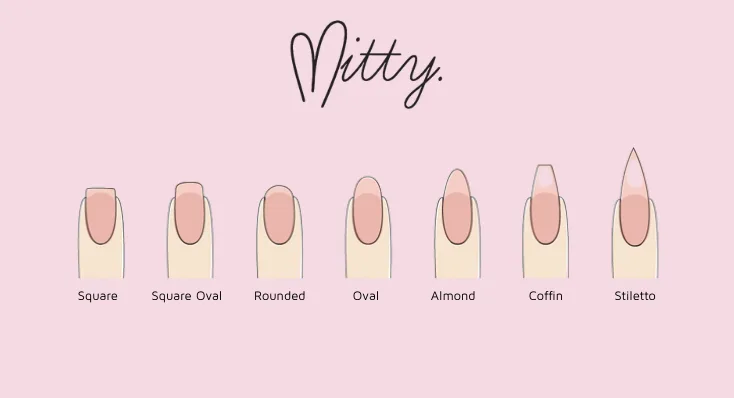
Their primary purpose in nail cosmetology is to provide a customizable and resilient solution. They allow individuals to achieve various nail shapes, lengths, and designs that natural nails may not support, offering both aesthetic versatility and functional durability.
How do Acrylic Nail Enhancements compare to Gel Nail Enhancements?
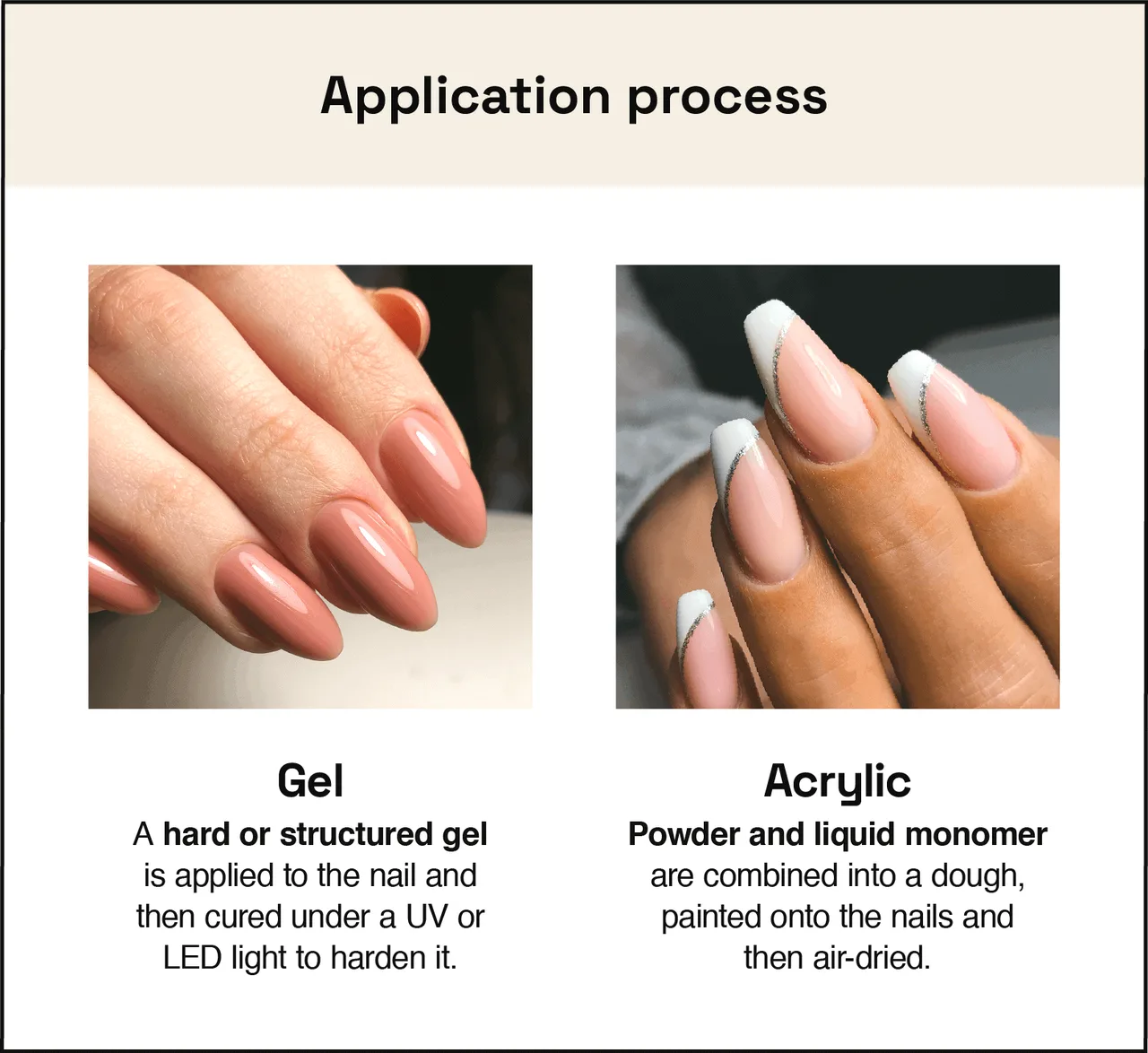
Acrylic nails mix a liquid monomer and powder polymer applied directly to the nail, while gel enhancements are pre-mixed polymer gel cured under UV or LED light. This difference in chemical composition and application dictates their distinct characteristics regarding durability, appearance, removal, and overall impact on natural nails. While both offer strength and aesthetic versatility, they achieve these outcomes through varying processes and material properties.
What are the common types of Nail Enhancements?
Acrylic, gel, and dip powder systems are common types of nail enhancements. Each offers distinct advantages in durability, appearance, and application. These categories cater to diverse preferences and provide various aesthetic and functional benefits for individuals seeking to enhance their natural nails.
Understanding these different enhancement types positions acrylics within the broader context of available nail beautification options. Acrylics involve a liquid monomer and powder polymer, gel enhancements rely on a pre-mixed polymer gel, and dip powder systems use a resin base with a powdered color. Each method delivers unique results tailored to specific needs.
Are Acrylic Nail Enhancements the healthiest option?
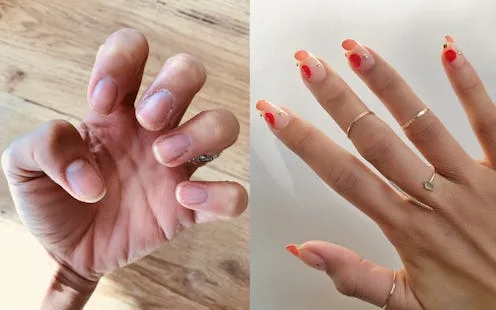
Acrylic nail enhancements are not the healthiest option. These enhancements involve chemical exposure and impact natural nail health. Proper application and removal techniques are crucial to minimize damage to the natural nails. Aftercare practices, such as moisturizing and protecting the nails, contribute significantly to maintaining overall nail health. Neglecting these aspects leads to issues like nail weakening, infections, or allergic reactions.
What is the history and evolution of Acrylic Nail Enhancements?
The history of acrylic nail enhancements began in the 1930s, evolving significantly from dental materials in the mid-20th century. This evolution highlights a journey from rudimentary applications to sophisticated nail technology. The development of acrylics represents a notable milestone in cosmetic science, offering durable and customizable options for nail beautification. This historical progression set the foundation for modern nail care practices and established acrylics as a prominent enhancement method.
How have application techniques for Acrylic Nail Enhancements evolved?
Acrylic nail application evolved from basic methods to sophisticated modern practices. This progression reflects a continuous refinement of materials and methods over time. Early practices involved simpler, less refined application, often focusing on basic length extension. Modern techniques emphasize precise product control, intricate design capabilities, and the integration of specialized brushes and forms to achieve diverse shapes and finishes.
What are the chemical components in Acrylic Nail Enhancements?
Acrylic nail enhancements consist of a liquid monomer (ethyl methacrylate) and a powdered polymer (polymethyl methacrylate). These components react upon mixing to form a strong, durable layer. The chemical interaction between the liquid and powder is fundamental to the hardening process. The liquid monomer acts as the catalyst, initiating the polymerization of the powdered polymer, which results in the solid acrylic material. This process creates a resilient and long-lasting nail enhancement.
Conclusion
Acrylic nail enhancements offer a durable and customizable solution for enhancing nail length and strength, distinguishing themselves from gel and dip powder systems through their unique chemical composition and application of liquid monomer and powder polymer. While not always the healthiest option if not properly maintained, their evolution from dental materials to sophisticated cosmetic technology highlights a significant advancement in nail care. Understanding their components, application techniques, and historical progression empowers individuals to make informed choices, ensuring both aesthetic versatility and functional durability.