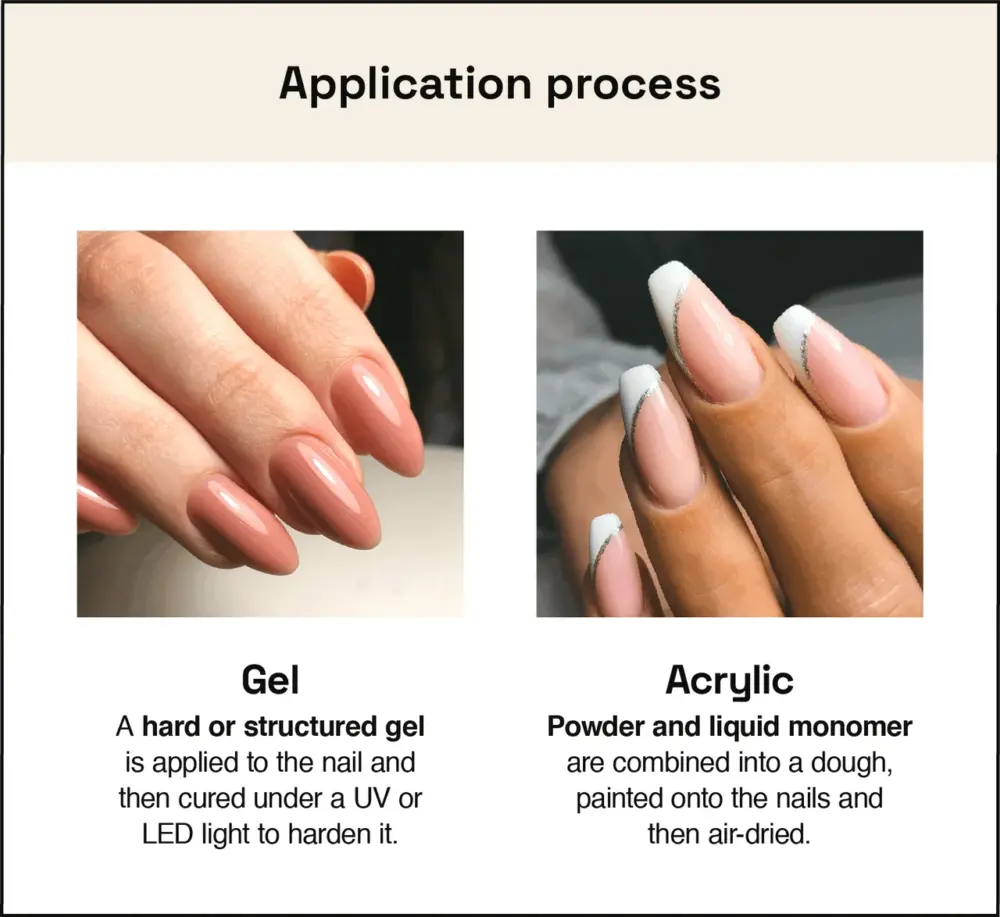
Choosing between gel and acrylic nails involves understanding their distinct properties to match your style and needs. Gel nails offer flexibility and a natural look, while acrylic nails provide exceptional durability and strength.
The primary differences between gel and acrylic nails lie in their chemical composition and application process. Gel nails cure under UV/LED light, whereas acrylic nails harden through air exposure of a liquid monomer and powder polymer.
When comparing the longevity and aesthetic of gel versus acrylic nails, several factors influence which option is superior for individuals. Gel nails generally last around two to three weeks, while acrylics typically endure for three to four weeks or even longer with proper maintenance.
This article at Barber Tall will delve into which option lasts longer, exploring the key differences, and the pros and cons of gel nails to help you make an informed decision for your perfect fake nails.
Which Lasts Longer: Gel or Acrylic Nails?
Acrylic nails generally last longer than gel nails, offering superior durability. While both gel and acrylic nails provide enhanced aesthetics and strength, their lasting power differs due to their fundamental compositions and curing processes. Acrylic nails typically maintain their integrity for up to three weeks or more. In contrast, gel nails usually last well for two to three weeks, sometimes up to four weeks with careful maintenance. This variation in longevity impacts individual preferences and maintenance routines.
What are the Key Differences Between Gel and Acrylic Nails?
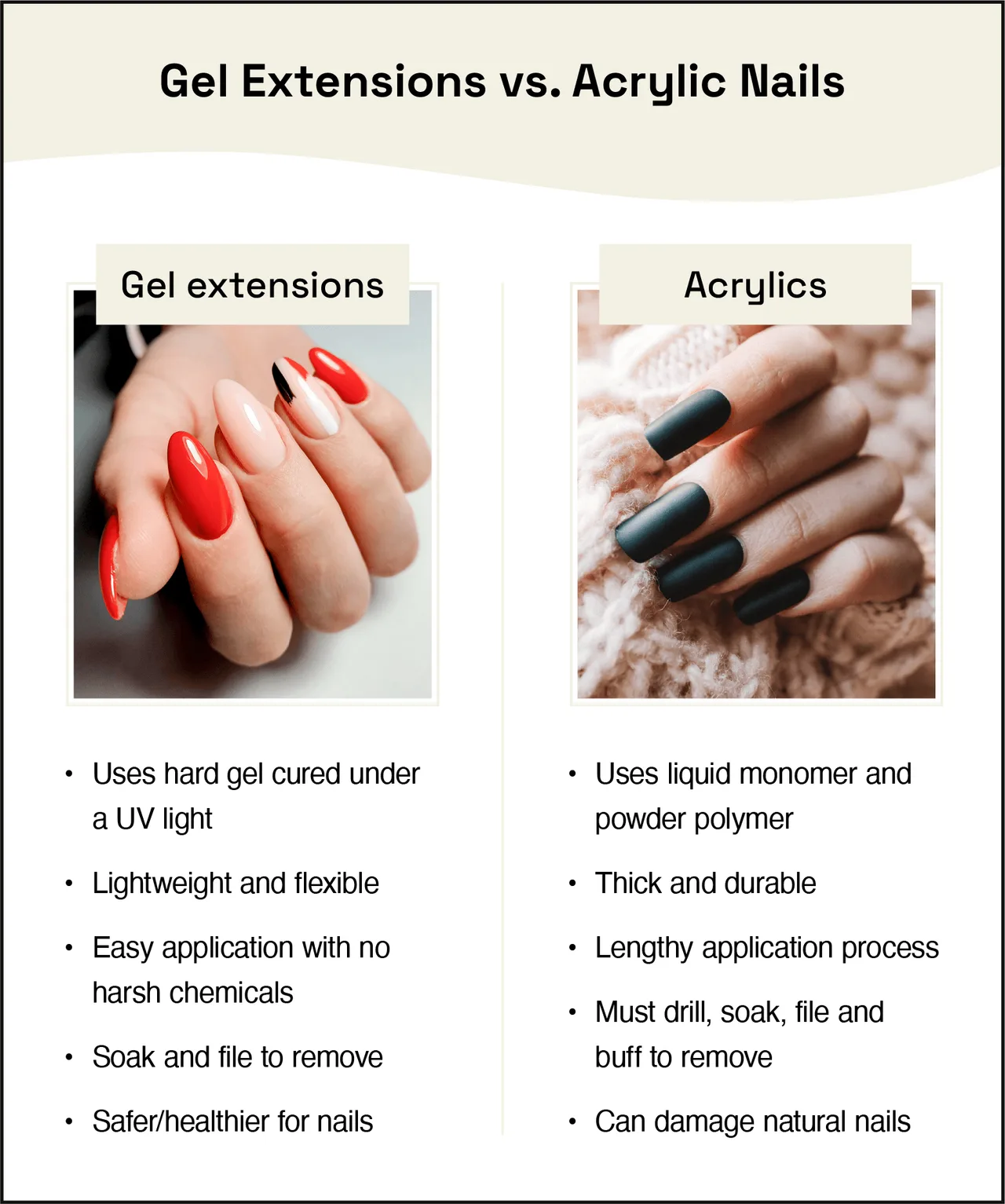
Gel and acrylic nails differ fundamentally in their chemical composition and application processes. These distinctions impact their appearance, durability, and the procedure required for their creation. Understanding these core differences helps in selecting the artificial nail type that best suits individual needs and aesthetic preferences.
Is the Application Process for Gel and Acrylic Nails Different?
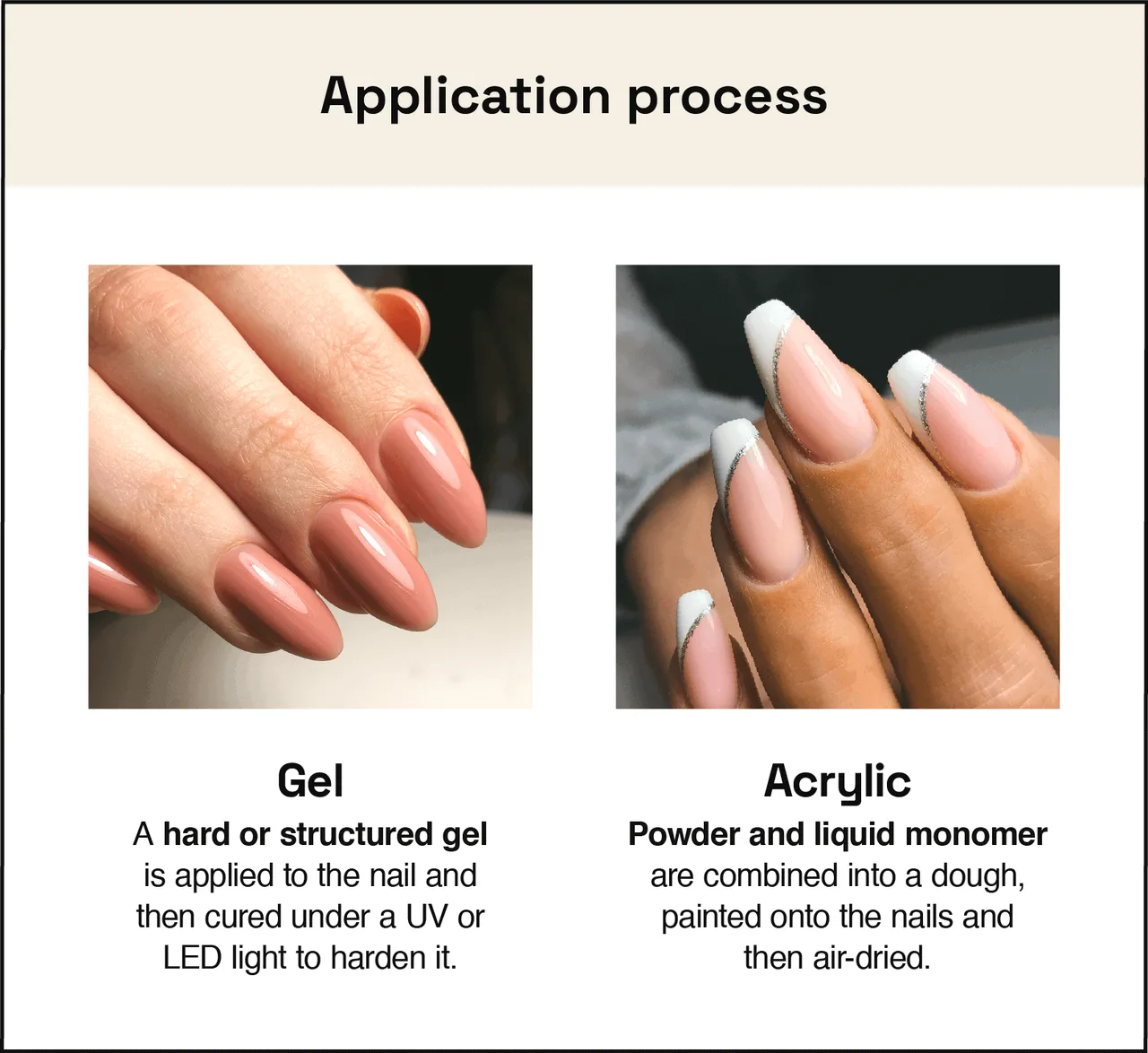
Yes, the application process for gel and acrylic nails differs significantly due to their distinct chemical compositions and curing methods. Gel nails involve applying a pre-mixed polymer gel that hardens under UV or LED light, while acrylic nails are created by combining a liquid monomer and a powder polymer to form a moldable substance that air-dries. These varied approaches result in different steps and tools for each type of artificial nail.
What Materials are Used in Gel vs. Acrylic Nails?
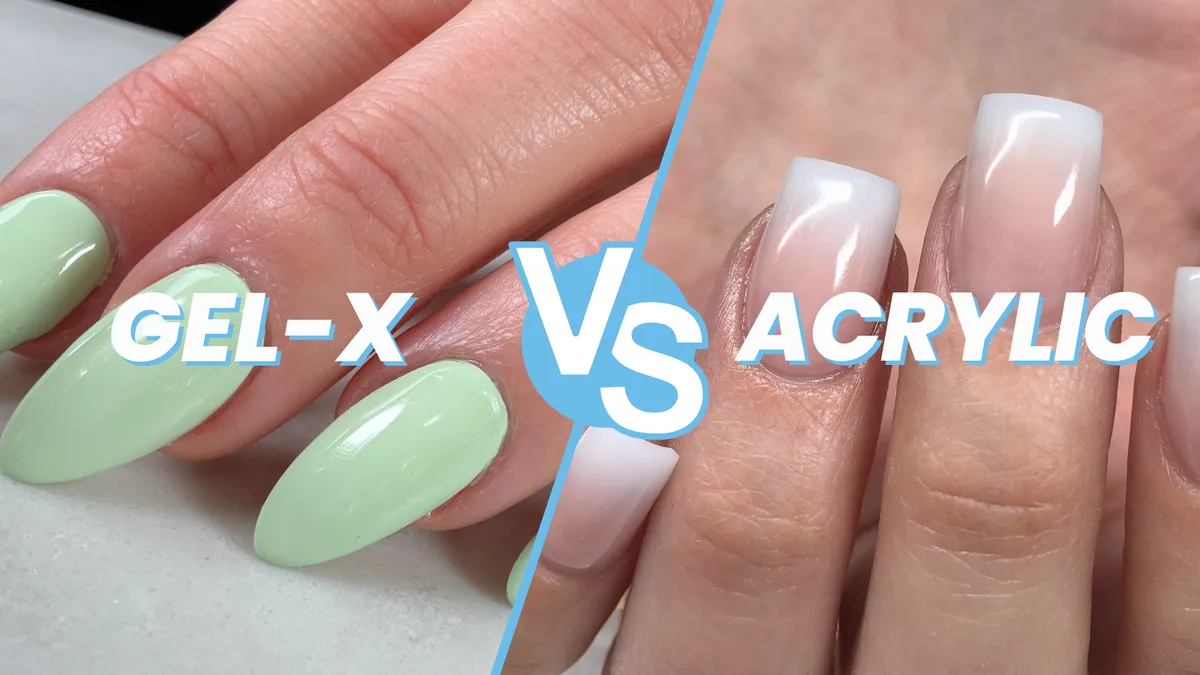
Gel nails primarily use an oligomer-based gel, while acrylic nails are made from a liquid monomer and a powder polymer. These distinct material compositions are responsible for the varied properties and application methods of each artificial nail type. Understanding the specific ingredients involved clarifies why gel and acrylic nails behave differently, from their curing processes to their final appearance and durability.
What are the Pros and Cons of Gel Nails
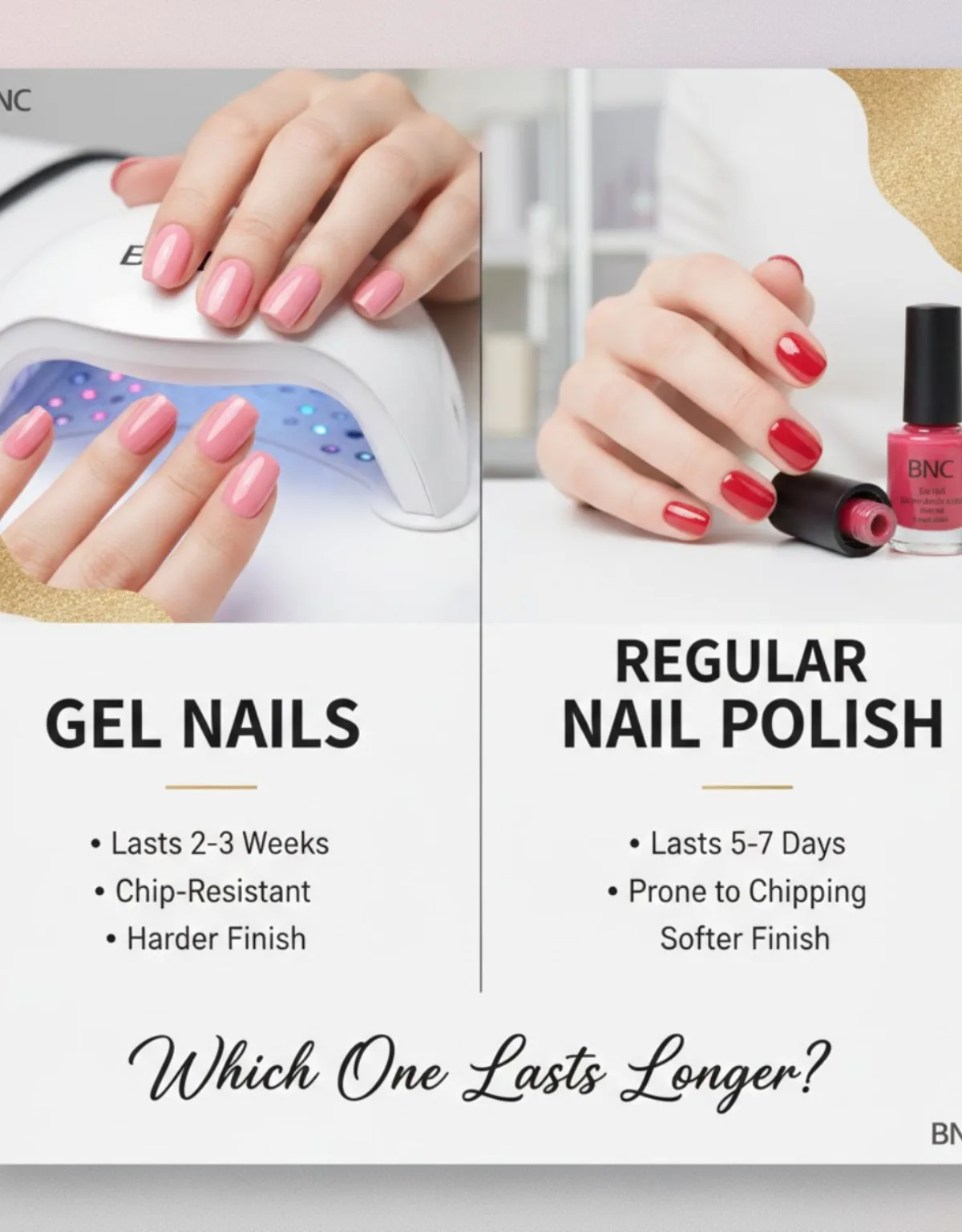
Gel nails offer several advantages, including a natural appearance and flexibility, but they also have drawbacks such as higher cost and less durability compared to acrylics. Gel nails are known for their ability to mimic the look and feel of natural nails, along with their lighter weight. However, individuals considering gel nails must weigh these benefits against their specific disadvantages. The application process for gel nails typically involves curing under UV/LED light, which raises concerns about UV exposure over time. According to Nhathuoclongchau.com.vn, UV nail lamps emit UVA rays that can cause skin aging and cell damage. Additionally, gel nails are generally more expensive than acrylic nails, and they typically last for two to three weeks before requiring maintenance.
What are the Pros and Cons of Acrylic Nails?

Acrylic nails provide exceptional durability and versatility, yet they also present disadvantages such as potential damage to natural nails and a less natural appearance. Understanding these specific benefits and drawbacks helps individuals determine if acrylics align with their preferences and lifestyle. Acrylic nails offer significant strength, making them resistant to breakage and ideal for those seeking long-lasting enhancements. They are also highly customizable, allowing for a wide range of shapes, lengths, and nail art designs. However, the application and removal processes for acrylics can be harsh on natural nails, potentially leading to thinning or weakening if not performed by a skilled technician. The strong chemical odor during application is a common concern for both clients and technicians. Additionally, while durable, acrylic nails require regular fills every two to three weeks to maintain their appearance and integrity.
Which Nail Type is Better Suited for Different Lifestyles?
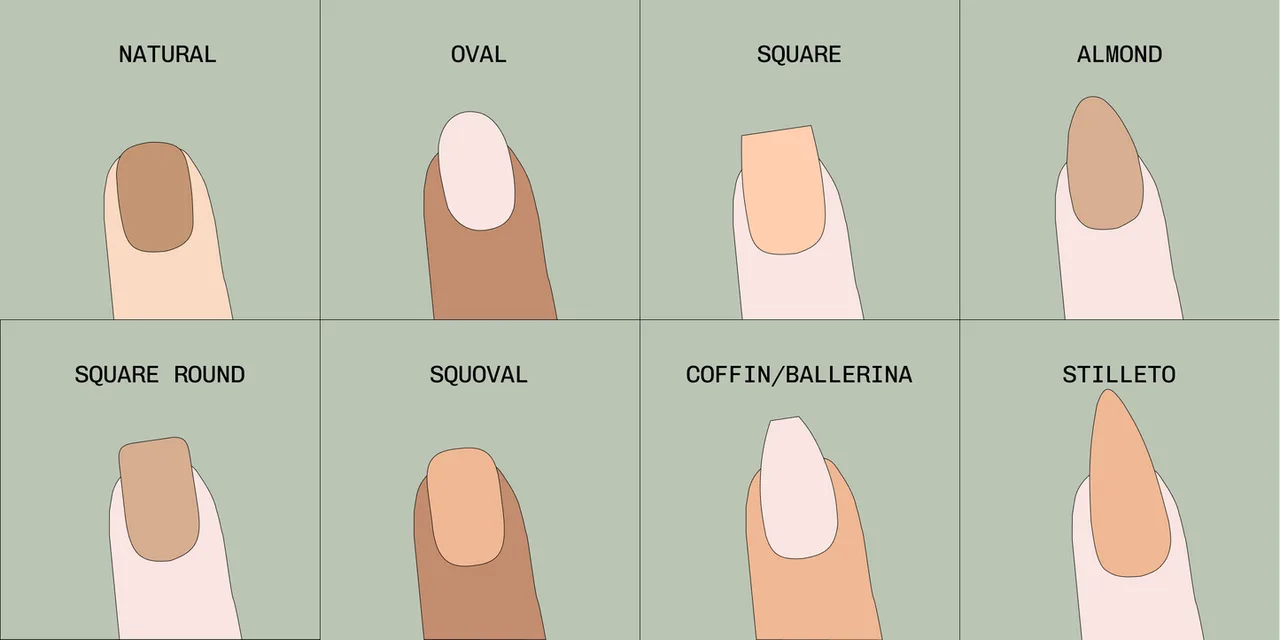
Gel and acrylic nails cater to distinct lifestyles due to their varying characteristics and maintenance requirements. This differentiation allows individuals to select an artificial nail type that complements their daily activities and professional demands. Gel nails, with their natural look and flexibility, often suit those seeking a subtle enhancement and who engage in less strenuous activities. Acrylic nails, known for their superior durability and strength, are generally more appropriate for individuals with active lifestyles or professions requiring extensive manual work.
How Do Gel and Acrylic Nails Impact Natural Nail Health?
Gel and acrylic nails impact natural nail health differently, primarily through their application, removal processes, and the materials used. Gel nails tend to be less damaging due to gentler removal, while acrylics may pose higher risks if improperly applied or removed. These distinctions influence the long-term integrity and appearance of the underlying natural nails, making proper care and professional application crucial for minimizing adverse effects.
Can Gel Nails Damage Your Natural Nails More Than Acrylics?
Gel nails are generally considered less damaging to natural nails than acrylics when applied and removed correctly. Both gel and acrylic nails can cause damage if not properly cared for or if removal is forced. Gel nails, particularly soft gels, typically involve a gentler removal process through soaking, minimizing physical trauma. To remove acrylic nails, they need to be soaked in acetone. Acrylic nails, while durable, often require more aggressive filing during removal, which can thin and weaken the natural nail over time.
What is the Removal Process for Gel and Acrylic Nails?
The removal process for gel and acrylic nails differs significantly due to their distinct compositions, requiring varied methods to minimize damage. Gel nails are typically removed by soaking, while acrylic nails often involve more intensive filing. These processes are crucial for preserving natural nail health.
Conclusion
Choosing between gel and acrylic nails ultimately depends on individual preferences for aesthetics, durability, and maintenance. Gel nails offer a more natural look and flexibility with a gentler removal process, lasting around a few weeks. In contrast, acrylic nails provide superior strength and longevity, enduring for up to a few weeks, though they require more aggressive removal and fills to maintain. Both options impact natural nail health differently, with proper application and removal being key to minimizing potential damage. Understanding these distinct characteristics allows for an informed decision tailored to one’s lifestyle and desired nail enhancement.